

Pile Driving Standards: 7 Critical Rules Every Contractor Must Follow

Table of Contents
- Introduction
- 1. Site Investigation and Soil Testing
- 2. Equipment Inspection and Certification
- 3. Operator Training and Competency
- 4. Pile Design and Load Testing
- 5. Driving Procedure and Quality Control
- 6. Safety Protocols and Hazard Control
- 7. Documentation and Compliance Verification
- 7 Critical Rules Summary
- Consequences of Ignoring Standards
- Final Word
Pile Driving Standards exist for one reason. To keep projects safe. To keep workers alive. To keep buildings standing. Without standards, chaos follows. Collapsed foundations. Injured workers. Lawsuits. Bankruptcies.
Every contractor must know Pile Driving Standards. Not just know them. Follow them. Every job. Every pile. Every day. The consequences of ignoring standards are severe. Fines. Project shutdowns. Criminal charges. Death.
Pile Driving Standards cover every aspect of the work. Equipment selection. Site preparation. Driving procedures. Safety protocols. Quality control. Documentation. Each area has specific requirements. Each requirement protects people and property.
The problem is that many contractors treat Pile Driving Standards as suggestions. They cut corners. They skip steps. They hope nothing goes wrong. Sometimes nothing does. Sometimes everything does. A collapsed foundation. A dead worker. A ruined company.
Understanding and following Pile Driving Standards is not optional. It is mandatory. It is the difference between success and disaster. This article covers 7 critical rules every contractor must follow.
1. Site Investigation and Soil Testing
Pile Driving Standards begin with the site. No pile driving should ever start without proper investigation. The ground must be understood. The soil must be tested. The risks must be identified.
Soil testing reveals critical information. Soil type. Density. Moisture content. Rock depth. Water table level. Each factor affects pile driving. Each factor determines equipment selection. Each factor influences driving procedures.
Pile Driving Standards require borehole testing at specified intervals. The number of boreholes depends on site size. The depth depends on pile length. The testing must be done by qualified geotechnical engineers.
Ignoring soil testing violates Pile Driving Standards. The consequences are predictable. Wrong equipment is selected. Piles cannot reach required depth. Foundations fail. Buildings crack. Lawsuits follow.
Site access must also be assessed. Can the crane reach the pile locations? Is the ground stable enough for heavy equipment? Are there overhead power lines? Underground utilities? Each factor must be documented and addressed.
Pile Driving Standards require written site investigation reports. These reports guide all subsequent work. They protect the contractor. They protect the client. They protect the public.
2. Equipment Inspection and Certification
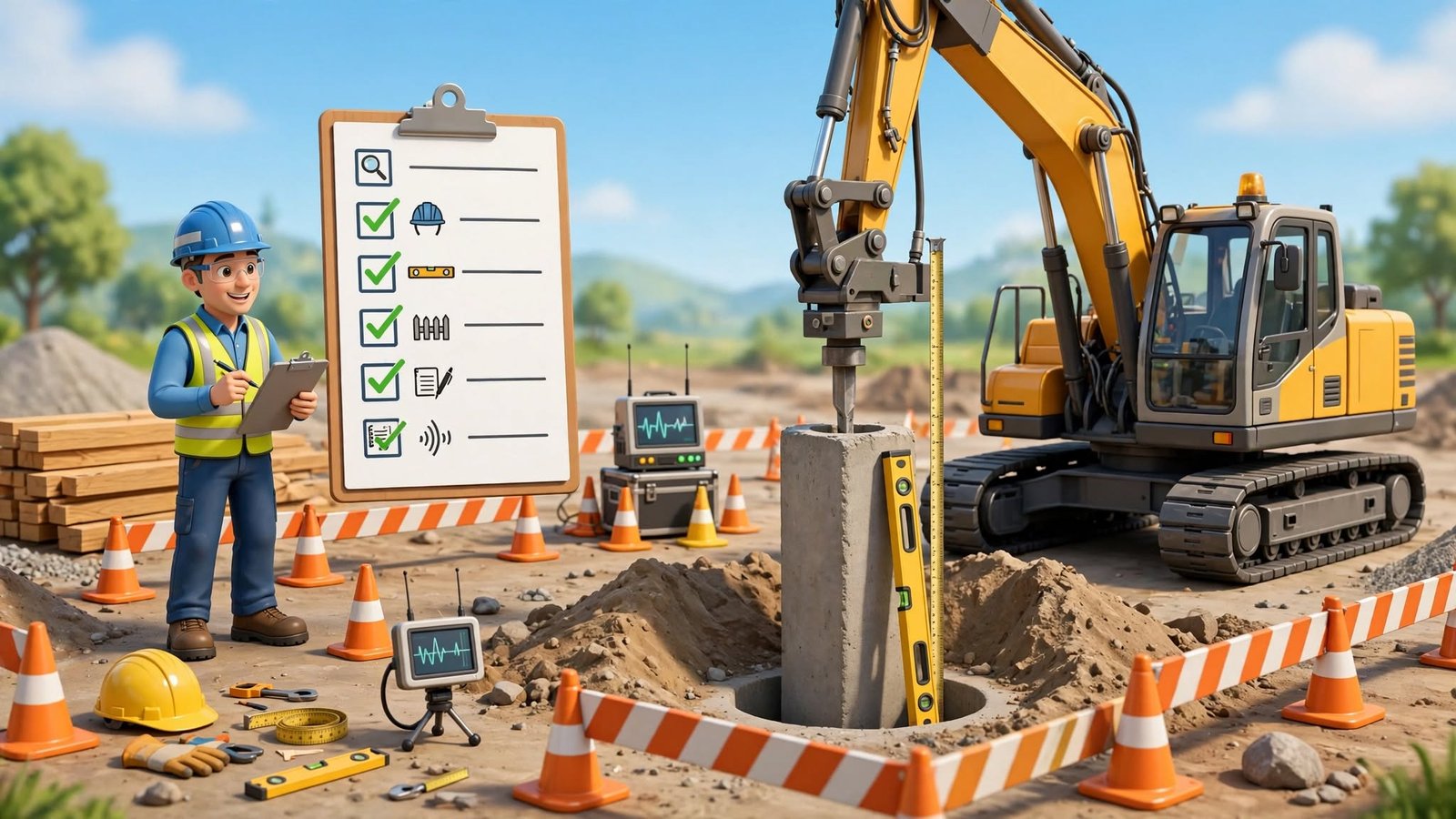
Pile Driving Standards require equipment inspection before every shift. Every hammer. Every crane. Every power pack. Every accessory. No exceptions.
Inspection covers critical components. Hydraulic hoses. Fittings. Connections. Brakes. Controls. Safety devices. Each component must be checked. Each must function properly. Each must be certified. Modern projects require top-tier gear, and skipping inspections on any machinery, whether a hammer or a telescopic wheel loader, invites disaster.
Pile Driving Standards require documented inspections. Checklists must be completed. Signatures must be obtained. Records must be maintained. These records protect the contractor if accidents occur.
Certification is also required. Cranes must have current load test certificates. Hammers must have maintenance records. Operators must have valid licenses. Pile Driving Standards are specific about certification requirements.
Equipment that fails inspection must be removed from service. It must be repaired. It must be re-inspected. It must be re-certified. Using failed equipment violates Pile Driving Standards. It endangers everyone on site.
Daily inspections are not enough. Pile Driving Standards require periodic comprehensive inspections. Monthly. Quarterly. Annually. Each inspection has specific requirements. Each must be documented.
3. Operator Training and Competency
Pile Driving Standards require trained operators. Not just anyone can run a pile driver. The work is complex. The risks are high. The consequences of error are severe.
Training covers multiple areas. Equipment operation. Safety procedures. Soil behavior. Pile types. Emergency response. Pile Driving Standards specify minimum training hours. They specify competency assessments. They specify certification requirements.
Operators must demonstrate competency. Written tests. Practical assessments. Supervised work. Pile Driving Standards require documentation of all training and assessment.
Experience matters. Pile Driving Standards require minimum experience levels for certain operations. Complex jobs require experienced operators. Simple jobs may allow less experienced operators under supervision.
Continuing education is required. Pile Driving Standards update regularly. New equipment. New techniques. New safety requirements. Operators must stay current. Certifications must be renewed.
Untrained operators violate Pile Driving Standards. They cause accidents. They damage equipment. They produce poor quality work. The consequences affect everyone.
4. Pile Design and Load Testing
Pile Driving Standards require proper pile design. The pile must be engineered for the load. The soil must support the load. The pile must transfer the load safely.
Design begins with load calculations. Dead loads. Live loads. Wind loads. Seismic loads. Each must be calculated. Each must be combined. The pile must handle the total load with safety factor.
These industry rules require geotechnical analysis. The soil must support the pile. The pile must not settle excessively. The pile must not pull out. The design must account for all conditions.
Load testing verifies the design. Static load tests. Dynamic load tests. These industry rules specify when testing is required. They specify test procedures. They specify acceptance criteria.
Test results must be documented. They must be submitted to the engineer. They must be approved before construction continues. These industry rules require this verification.
Piles that fail load tests must be replaced. They must be redesigned. They must be retested. Accepting failed piles violates these industry rules. It endangers the structure. It endangers the public.
5. Driving Procedure and Quality Control
These industry rules specify driving procedures. The hammer must be selected correctly. The energy must be set properly. The driving must be monitored continuously. Making the right choices here is just as crucial as selecting the right 10 essential tools needed for the site.
Hammer selection depends on pile type. Soil conditions. Required depth. These industry rules provide selection guidance. Contractors must follow it.
Driving energy must be controlled. Too much energy damages the pile. Too little energy prevents penetration. These industry rules specify energy limits. They specify blow counts. They specify refusal criteria.
Quality control is continuous. Penetration rates must be monitored. Blow counts must be recorded. Pile alignment must be checked. These industry rules require this monitoring.
Deviation from standards must be addressed. If the pile goes crooked, stop. If the pile refuses too early, investigate. If the pile damages, replace it. These industry rules require corrective action.
Records must be maintained. Driving logs. Blow counts. Penetration rates. Alignment checks. These industry rules require documentation. The records protect the contractor. They verify compliance.
6. Safety Protocols and Hazard Control
These industry rules prioritize safety. Every hazard must be identified. Every risk must be controlled. Every worker must be protected.
Hazard identification is the first step. Overhead power lines. Underground utilities. Uneven ground. Heavy equipment. Flying debris. Noise. Vibration. Each hazard must be assessed. Each must be controlled.
These industry rules require specific controls. Exclusion zones around the pile driver. Hearing protection for all workers. Hard hats. Safety glasses. High-visibility clothing. Each control is mandatory.
Emergency procedures must be established. What happens if the pile driver tips? What happens if a hose bursts? What happens if someone gets injured? These industry rules require written procedures. They require training. They require drills.
First aid must be available. Trained first aiders must be on site. First aid kits must be stocked. Emergency contacts must be posted. These industry rules require this preparation.
Incident reporting is mandatory. Every accident must be reported. Every near miss must be reported. These industry rules require investigation. They require corrective action. They require documentation.
7. Documentation and Compliance Verification
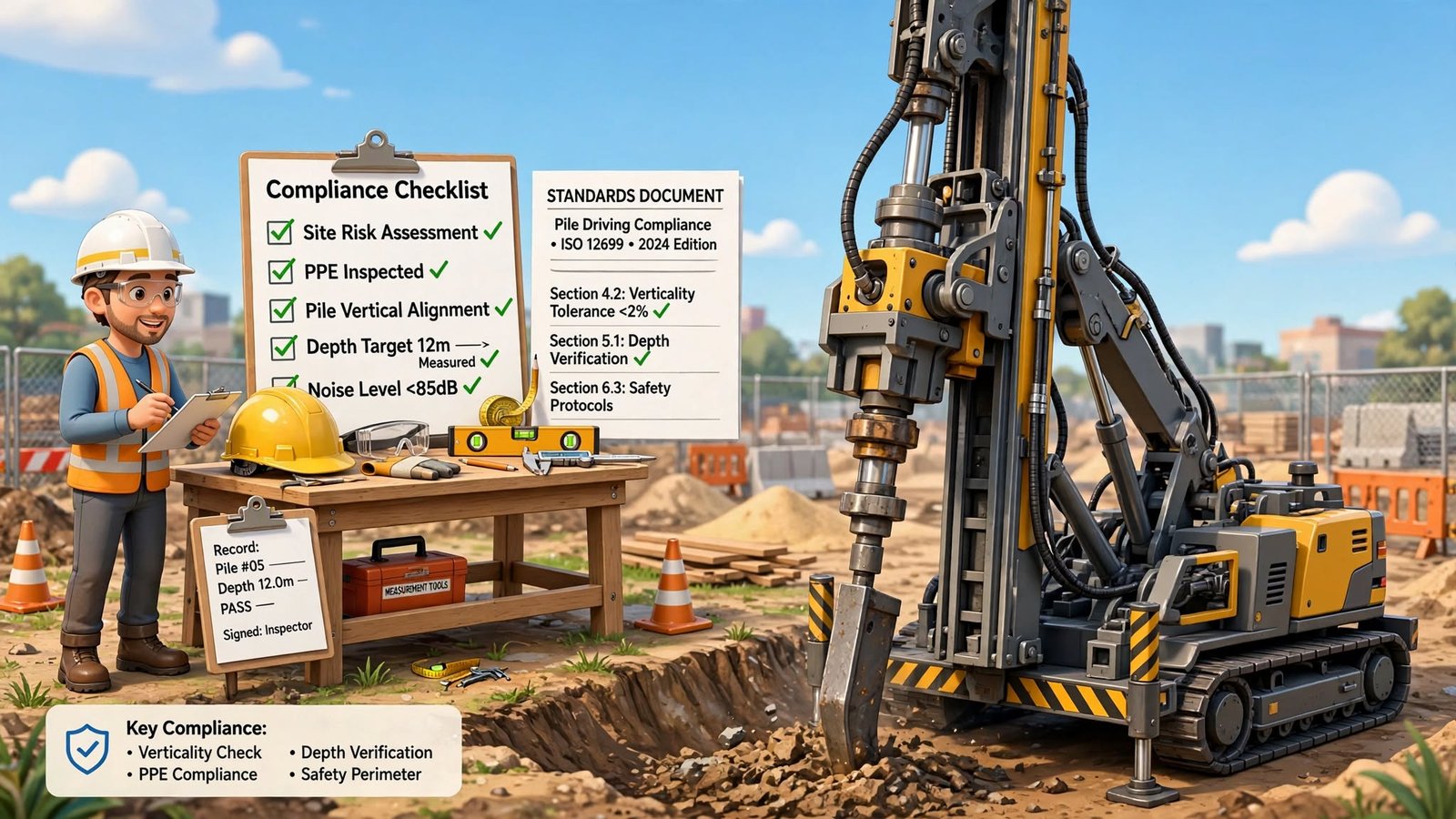
These industry rules require documentation. Every activity must be recorded. Every decision must be justified. Every result must be verified.
Documentation includes multiple items. Site investigation reports. Equipment inspection records. Operator certifications. Pile design calculations. Load test results. Driving logs. Safety records. Each document serves a purpose. Having the right logs prevents errors when deploying complicated pile driving equipment.
These industry rules require document retention. Records must be kept for specified periods. They must be available for inspection. They must be provided to authorities when requested.
Compliance verification is ongoing. Internal audits. External inspections. Regulatory reviews. These industry rules require this verification. It ensures that work meets requirements.
Non-compliance must be addressed. Minor issues must be corrected immediately. Major issues may require stopping work. These industry rules specify corrective procedures.
Documentation protects everyone. The contractor is protected from false claims. The client is protected from poor quality. The public is protected from unsafe structures. These industry rules require this protection.
7 Critical Rules Summary
- 1. Complete site investigation before any work begins.
- 2. Inspect and certify all equipment before every shift.
- 3. Train and certify all operators for their specific tasks.
- 4. Design and load test all piles per engineering requirements.
- 5. Follow driving procedures and monitor quality continuously.
- 6. Implement safety protocols and control all hazards.
- 7. Document all activities and verify compliance.
Consequences of Ignoring Standards
Ignoring these industry rules has consequences. Legal consequences. Financial consequences. Safety consequences.
Legal consequences include fines. Penalties. Criminal charges. Contractors who violate these industry rules face prosecution. They face imprisonment. They face permanent loss of license.
Financial consequences include lawsuits. Damage claims. Project delays. Contractors who ignore these industry rules pay dearly. Insurance costs rise. Bonding capacity drops. Business fails.
Safety consequences include injuries. Deaths. Property damage. Contractors who disregard these industry rules cause harm. Workers suffer. Families suffer. Communities suffer.
The message is clear. Follow these industry rules. Always. Every job. Every time.
Final Word
These industry rules are not optional. They are mandatory. They protect workers. They protect structures. They protect the public.
Every contractor must know these industry rules. Every contractor must follow them. Every contractor must document compliance.
The 7 critical rules covered here are fundamental. Site investigation. Equipment inspection. Operator training. Pile design. Driving procedures. Safety protocols. Documentation.
These rules apply to every project. Large or small. Simple or complex. Urban or rural. These industry rules do not change based on convenience.
Contractors who follow these industry rules succeed. They build safe structures. They avoid lawsuits. They earn respect. They stay in business.
Contractors who ignore these industry rules fail. They cause accidents. They face prosecution. They lose everything.
The choice is clear. Follow these industry rules. Build safe. Build strong. Build right.