Pile Driver Safety: 7 Deadly Hazards Every Operator Must Avoid

Table of Contents
- Introduction
- 1. Hydraulic System Failures
- 2. Machine Tip-Overs and Instability
- 3. Flying Debris and Impact Injuries
- 4. Electrical Hazards and Overhead Lines
- 5. Pinch Points and Crushing Zones
- 6. Noise-Induced Hearing Loss
- 7. Fatigue and Human Error
- Why Most Companies Fail at Safety
- Basic Safety Checklist for Every Shift
- Final Word
Pile Driver Safety: 7 Deadly Hazards Every Operator Must Avoid
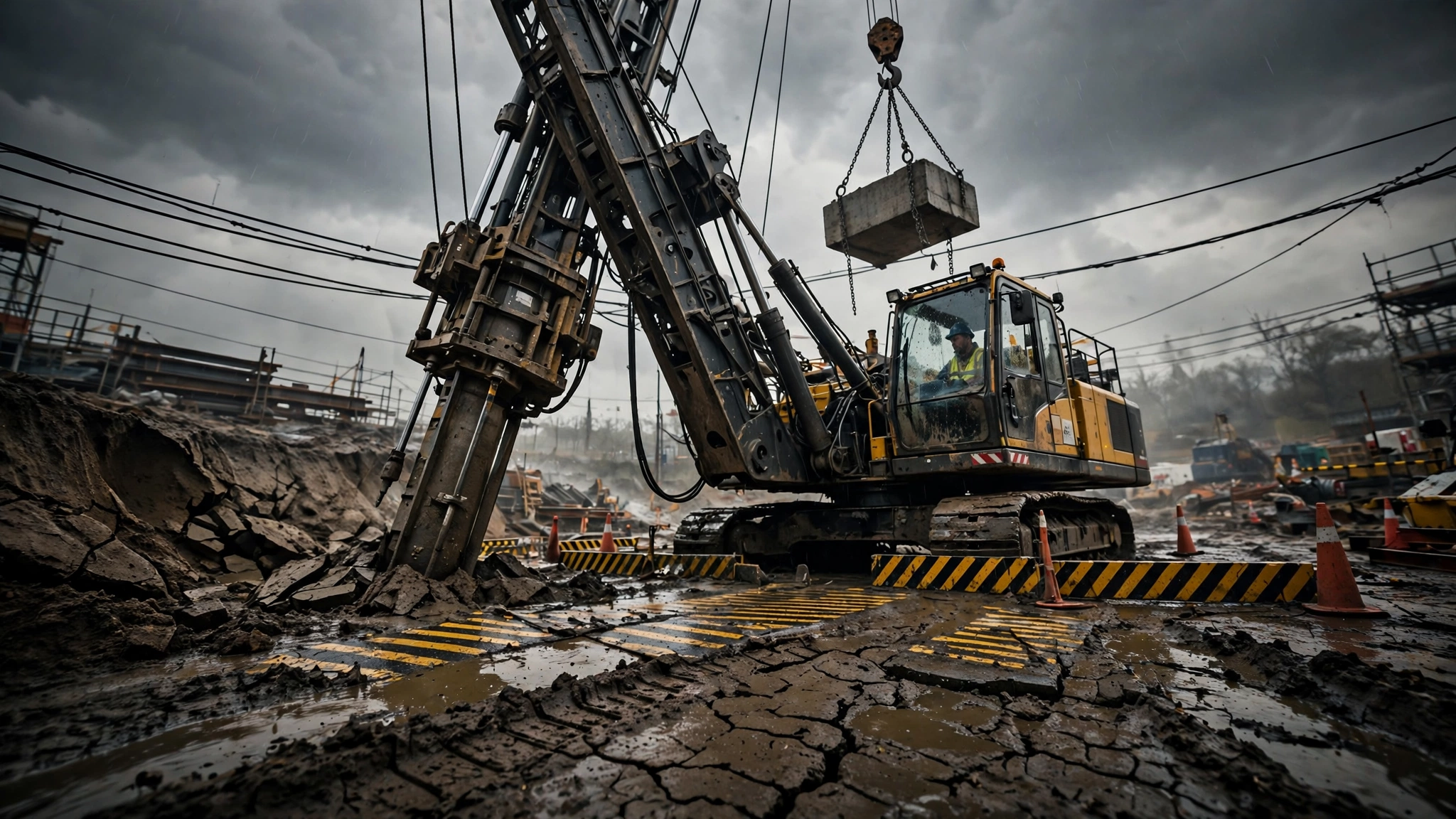
Pile driving is one of the toughest jobs in construction. It’s heavy. It’s powerful. It’s loud. And when something goes wrong, it goes wrong fast. One mistake. One moment of carelessness. One skipped safety check. That’s all it takes.
A pile driver is not a forgiving machine. Whether you are running a giant rig or a compact Typhon Terror X Storm Mini Excavator (External Link 1), the risks remain serious. Every year, operators get injured. Some lose limbs. Some lose their lives. And almost every single time, the accident could have been prevented.
Take the example of a young operator working on a bridge foundation project. Third week on the job. He didn’t check the hydraulic hoses before starting his shift. One hose was worn. Nobody knew. During operation, that hose burst at full pressure. Hot hydraulic fluid sprayed everywhere. He got burned badly. Second-degree burns on his arms and face. Out of work for 4 months.
That’s the reality of this work. Most people don’t understand how dangerous these machines really are. So here’s the straight talk. No sugarcoating. No corporate nonsense. Just the real hazards and how to avoid them.
1. Hydraulic System Failures
The hydraulic system is the heart of a pile driver. It delivers the power that drives massive piles into the ground. But when that system fails, it’s a disaster waiting to happen.
High-pressure hydraulic fluid is no joke. Operating pressures range from 3,000 to 5,000 PSI. At that pressure, fluid can penetrate skin. It causes severe injuries. Blindness. Amputations. Even death.
Hoses burst mid-operation regularly on sites that skip inspections. Following proper pile driver maintenance (Internal Link 1) routines prevents this. The sudden release of pressure makes the whole machine jerk violently. Anyone standing too close gets hit. Anyone in the wrong spot goes down.
Here’s what Pile Driver Safety demands when it comes to hydraulics:
- Every hose must be inspected before starting work. Look for cuts, bulges, or any signs of wear. Run a hand along the hoses. Feel for soft spots or heat damage.
- Never work on the hydraulic system while the machine is running. Pressure must be released. The system must be locked out. If the operator doesn’t know how to do this properly, someone who does must handle it.
- Protective gear is mandatory. Face shields. Heavy gloves. Protective clothing. It might look uncomfortable. But being uncomfortable for a shift beats getting sprayed with hot oil.
Operators who take Pile Driver Safety seriously follow these rules. The ones who cut corners get hurt.
2. Machine Tip-Overs and Instability
A pile driver is top-heavy. The hammer sits at the top of a tall leader. The base is narrow. Add uneven ground, soft soil, or a slight slope, and tip-over becomes a real risk.
Consider a site where an operator positioned the pile driver on ground that looked solid. But it wasn’t. Soft clay lay just a few feet down. When hammering started, the vibration caused the soil to shift. The machine started tilting. Slowly at first. Then faster. The operator barely jumped clear before it went over.
Tip-overs don’t happen slowly. They happen in a split second. One minute the machine is working. The next minute, it’s on its side. Thousands of pounds of steel crashing down.
Here’s what Pile Driver Safety requires for stability:
- Ground conditions must be checked before setting up. Walk the site. Test the soil. If there’s any doubt, get a geotechnical assessment. Never assume it’s safe.
- Outriggers and stabilizers must be used. Always. Extend them fully. Put cribbing or mats under them if needed. Spread the weight.
- The machine must be leveled properly. Use built-in level indicators. If the pile driver doesn’t have them, use a manual level.
- Never operate on a slope that exceeds manufacturer limits. If the machine starts shifting, stop. Reset. Reposition.
Site managers sometimes push operators to work on questionable ground. “It’ll be fine, just do it,” they say. The answer must always be no. Pile Driver Safety is not negotiable. A bent machine is expensive. A dead operator is permanent.
3. Flying Debris and Impact Injuries
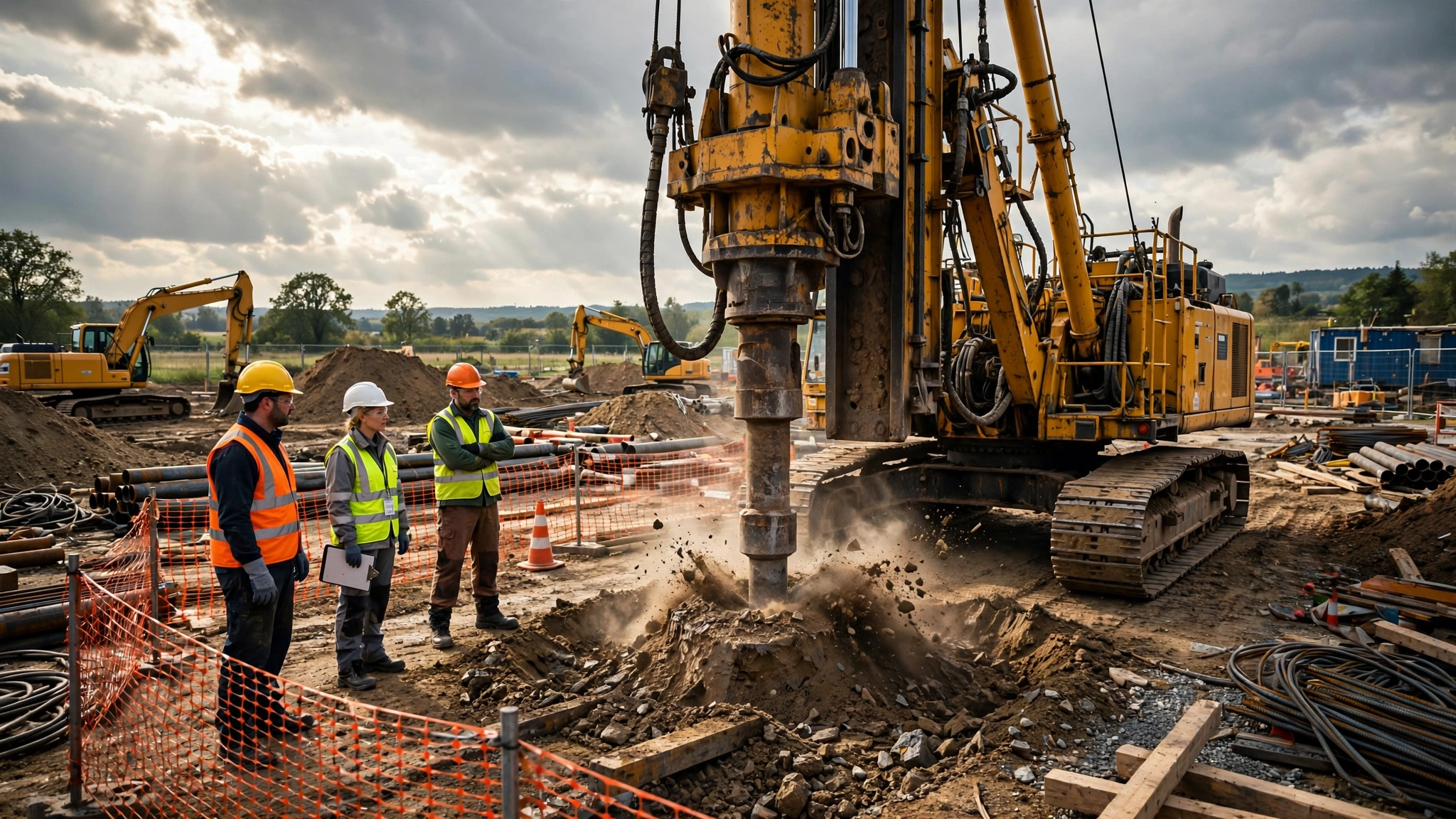
Pile driving is violent. Heavy steel hammers against heavy steel piles. Rocks, concrete chunks, and metal fragments go flying. Sometimes they land close. Sometimes they fly across the entire site.
Operators get hit by debris regularly. Small stuff hurts. Larger stuff maims. A piece of rock can fly up and hit a face. Without safety glasses, eyes get lost. One operator lost an eye because he wasn’t wearing safety glasses. The company had them available. He just didn’t bother.
Driving concrete piles is even worse. Pre-stressed concrete can shatter. Those shards are sharp. They move fast. They slice through skin like butter.
So what does Pile Driver Safety say about debris?
- Hard hats are mandatory. This should be obvious, but operators still show up on site without them. A hard hat protects the head. Wear it.
- Safety glasses or face shields are non-negotiable. Eyes don’t grow back.
- Stay clear of the impact zone. Establish a safety perimeter. Nobody should be within 50 feet of the pile driver during operation. 100 feet is better.
- Use protective screens or shields if available. Some newer machines have built-in guards. If the machine doesn’t, build temporary barriers.
- Never stand in line with the pile. Debris follows the path of least resistance. Don’t be in that path.
New operators especially don’t understand how far stuff can fly. They need to be shown. A simple demonstration with a rock near the idle machine sends the message.
4. Electrical Hazards and Overhead Lines
This hazard scares experienced operators the most. Overhead power lines are everywhere. And a pile driver is tall. Very tall.
The leader goes up. The hammer gets positioned. The machine swings around. Next thing, contact with a power line. Maybe it’s a low-voltage line. Maybe not.
Electrocution is almost always fatal. There’s no “almost got shocked.” Either live or die. And if survive, permanent damage remains.
Operators have positioned pile drivers directly under power lines. When questioned, the response was “I was careful.” Careful doesn’t cut it. Being careful all day doesn’t prevent one small mistake.
Here’s how Pile Driver Safety handles overhead lines:
- Before any job starts, walk the site. Identify every power line. Every single one.
- Call the utility company. Have them mark their lines. In most places, this is the law.
- Stay at least 20 feet away from any power line. More if possible. For high voltage lines, stay even farther.
- Use a spotter. Have someone watch the leader as the machine moves and raises it. They can see things the operator can’t from the cab.
- If the pile driver has a telescopic leader, keep it retracted when moving. Extend it only when fully positioned.
- If power lines are unavoidable on a site, de-energize them. Utility companies will do this if given enough notice.
Pile Driver Safety around electricity is not optional. Some operators walk off jobs when the site manager refuses to take precautions. Some things are not worth the risk.
5. Pinch Points and Crushing Zones
A pile driver has dozens of pinch points. Places where steel meets steel. Places where gears mesh. Places where components move past each other.
If a hand, arm, or foot gets in the wrong place at the wrong time, that body part is gone. Crushed. Severed. Destroyed. Fingers get smashed. Hands get broken. Feet get caught between tracks and bases. One operator had his foot crushed flat. Multiple surgeries followed. He walks with a limp to this day.
The worst part is that almost every pinch point injury happens because the operator got complacent. Done the job a hundred times. Thought they knew it all. Stopped paying attention.
Pile Driver Safety requires treating every moving part with respect, a rule that applies whether you’re operating a towering rig or a Typhon Terror X Storm Mini Excavator (External Link 2):
- Never put hands or feet near moving parts while the machine is running. Not even for a second.
- Use lockout-tagout procedures during maintenance. Isolate the power. Lock the controls. Put a personal lock on it. Never trust someone else’s lock.
- Stay clear of hydraulically operated parts. Cylinders can extend without warning. Pins can shift.
- When swinging the machine, ensure the area is clear. Give a 360-degree view. Use mirrors. Use a spotter.
- Teach the crew about pinch points. Walk them around the machine. Point out every dangerous spot. Make them memorize it.
Many sites have a rule: any contact with moving parts triggers a site-wide safety meeting. Everyone stops. Everyone reviews Pile Driver Safety. Everyone reminds each other what’s at stake.
6. Noise-Induced Hearing Loss
This hazard is silent. Literally. Hearing loss doesn’t happen in a dramatic moment. It happens slowly. Day after day. Strike after strike. By the time it’s noticed, it’s permanent.
A pile driver is insanely loud. Noise levels range from 100 to 120 decibels. That’s like standing next to a jet engine. Without protection, permanent hearing damage happens in minutes.
Some operators refuse to wear earplugs. “It’s just noise,” they say. “I can handle it.”
Fast forward 10 years. Those same operators can’t hear their own grandchildren talk. They need hearing aids in their 40s. They get tinnitus. Constant ringing in the ears. Every minute. Every hour. Every day. No relief.
Protect the crew. Pile Driver Safety includes hearing protection:
- Wear earplugs or earmuffs. Both if possible. Double protection is not overkill.
- Choose the right rating. Look for NRR (Noise Reduction Rating) of at least 30. That’s the minimum for pile driver work.
- Keep hearing protection on the person at all times. Attach it to the hard hat if possible.
- Replace earplugs regularly. They get dirty. They lose their effectiveness.
- Get hearing tested every year. Early detection is key.
Don’t think toughness replaces protection. The only thing tough is living with constant ringing in the ears.
7. Fatigue and Human Error
This is the deadliest hazard. And it’s completely preventable. Fatigue makes an operator slow. It makes them sloppy. It makes them miss things. They don’t see the hose about to burst. They don’t notice the ground shifting. They forget to extend the outriggers. They forget to check the power lines.
Some operators work 18-hour days because the deadline is tight. They tell themselves they’re fine. They’re not fine. They become a danger to themselves and everyone around them.
Pile Driver Safety is impossible when exhaustion sets in. Here’s how to manage fatigue:
- Set strict shift limits. 8 to 10 hours max. 12 in absolute emergencies. Never more than that.
- Take breaks. 15 minutes every 2 hours. A full meal break in the middle of the shift.
- Rotate operators. Have a backup who can take over when the primary operator gets tired.
- Stay hydrated. Drink water. Not energy drinks. Not coffee. Water.
- Get proper sleep. 7 to 8 hours minimum. No sleep means no safe work.
- Be honest about fatigue. Speak up. Tell the supervisor. Tell the crew. Nobody judges anyone for being safe.
Many sites have a rule: any operator who admits fatigue gets a break. No questions asked. No punishment. That’s how a culture of Pile Driver Safety gets built.
Why Most Companies Fail at Safety
Companies that are good at Pile Driver Safety have one thing in common. They invest in their people. The ones that are bad cut corners to save money.
Safety is not a cost. It’s an investment. Every dollar spent on training, equipment, and proper pile driver maintenance (Internal Link 2) saves money on medical bills, lawsuits, and downtime.
Consider a company that refused to buy proper hoses. They’d patch old ones. Save a few hundred dollars. Then a hose burst. The operator got burned. The lawsuit cost over a million dollars. That company went bankrupt within a year. Don’t be that company.
Basic Safety Checklist for Every Shift
Use this checklist every single day. No exceptions.
Before starting:
- Walk the site
- Identify hazards
- Check overhead lines
- Test ground conditions
- Position machine correctly
- Extend outriggers
- Check all hoses
- Grease all fittings
- Test all controls
- Check hydraulic fluid
- Verify safety gear is on
During operation:
- Keep everyone clear
- Watch for debris
- Monitor machine movement
- Stay alert
- Take breaks
- Communicate with crew
After operation:
- Lower leader fully
- Shut down properly
- Clean machine
- Note any issues
- Log hours and observations
Final Word
Pile Driver Safety is the single most important factor in a successful project.
The machine will do its job. The piles will go down. The foundation will get built. But none of that matters if someone gets hurt. Or worse, killed.
Seven hazards. Seven ways to stay alive. Seven reasons to stop cutting corners. Hydraulic failures. Tip-overs. Debris. Electrocution. Pinch points. Hearing loss. Fatigue.
Every single one of these is preventable. Every single one has been the cause of injury or death. Every single one should be on every operator’s mind every single day.
Take care of the crew. Take care of the machine. Take care of yourself. That’s what Pile Driver Safety is really about.