

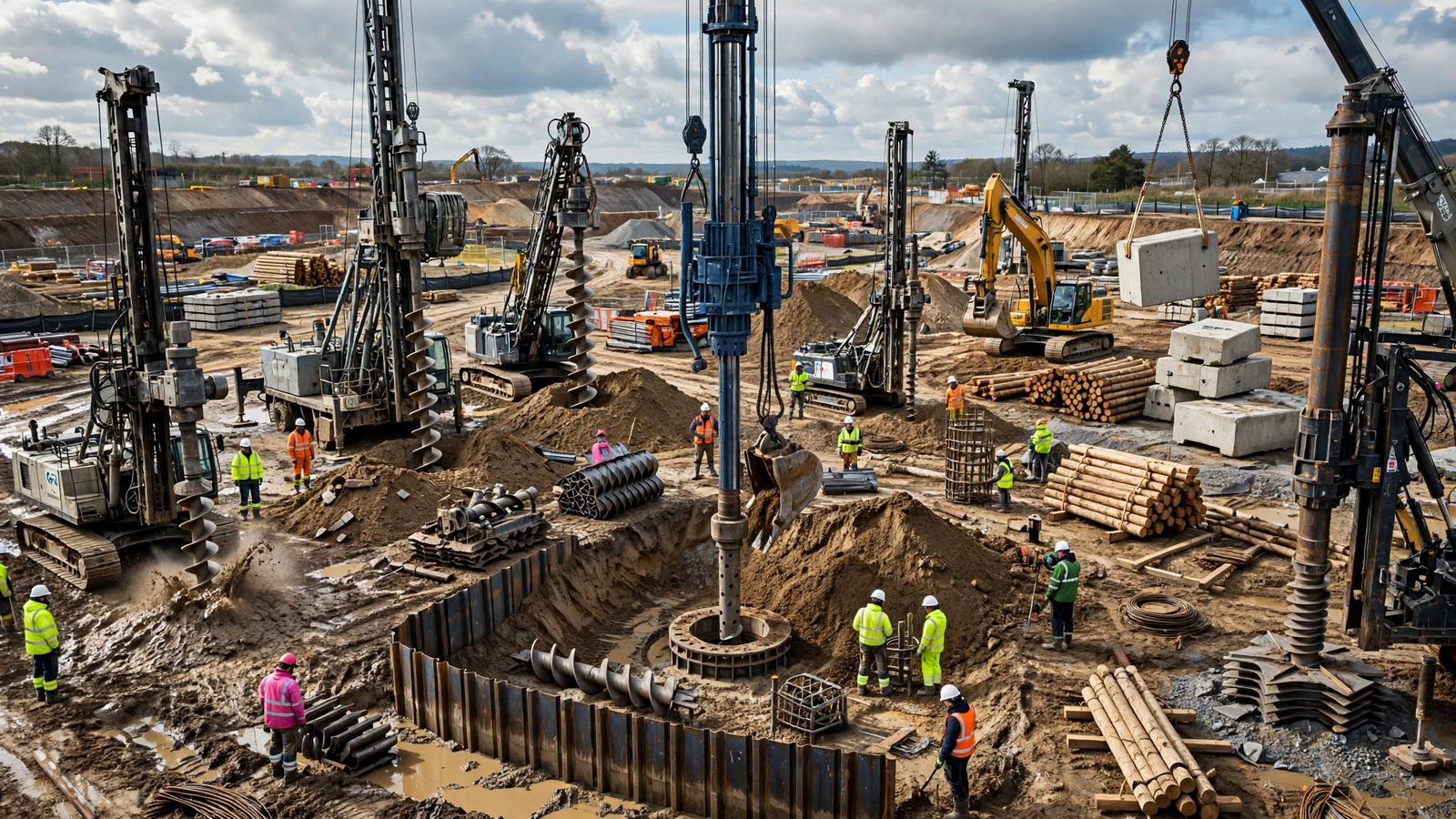
Pile Driving Methods: 10 Proven Techniques That Transform Foundation Work

Table of Contents
Pile Driving Methods determine whether a foundation project succeeds or fails. The right method drives piles quickly, safely, and accurately. The wrong method causes delays, damage, and cost overruns.
Every construction site is different. Soil conditions vary. Pile types vary. Load requirements vary. Environmental restrictions vary. No single Pile Driving Methods approach works everywhere. Contractors must understand all available techniques and select the right one for each job.
Pile Driving Methods have evolved significantly over the years. Older techniques relied on brute force. Modern methods use precision engineering. They reduce noise. They reduce vibration. They increase accuracy. They improve safety. Whether employing standard setups or utilizing heavy equipment like the Typhon Thunder VI Wheel Loader for site prep, technique matters.
Understanding Pile Driving Methods is essential for every contractor. The wrong choice wastes time and money. The right choice transforms foundation work. It speeds up projects. It reduces costs. It improves quality.
Here are 10 proven Pile Driving Methods that transform foundation work. Each method has been tested on thousands of projects. Each one delivers results when applied correctly.
1. Impact Driving
Impact driving is the most traditional of all Pile Driving Methods. A heavy hammer strikes the pile repeatedly. The impact force drives the pile into the ground. The process continues until the pile reaches the required depth.
Impact hammers come in different types. Diesel hammers are self-contained and powerful. Hydraulic hammers offer more control. Air hammers are older but still used in specific applications.
Pile Driving Methods using impact driving work well in most soil conditions. They are effective in dense soils. They are effective in rocky ground. They are effective for heavy piles. The impact force overcomes resistance that other methods cannot.
The advantages of impact driving are clear. It is versatile. It is powerful. It is relatively simple. Contractors have used this Pile Driving Methods approach for over a century. It remains the most common technique worldwide.
The disadvantages are also clear. Impact driving is loud. It produces significant vibration. It may damage nearby structures, bringing attention to damaging effects on local foundations. It may not be suitable for urban areas. Contractors must assess each site before selecting this method.
2. Vibratory Driving
Vibratory driving is one of the most efficient Pile Driving Methods. A vibratory hammer attaches to the pile. The hammer generates rapid vibrations. The vibrations reduce soil resistance. The pile sinks into the ground.
The principle is simple. Soil particles vibrate and rearrange. Friction between the pile and soil decreases. The pile weight and hammer force drive it down. The process is fast and efficient.
Pile Driving Methods using vibration work best in granular soils. Sand and gravel respond well to vibration. Clay soils are less responsive. Contractors must assess soil conditions before selecting this method.
The advantages of vibratory driving are significant. It is much faster than impact driving. It is quieter. It produces less ground vibration. It is safer for nearby structures. These advantages make it ideal for urban projects.
The limitations must be understood. Vibratory driving cannot penetrate dense soils. It cannot drive piles through obstructions. It cannot achieve the same capacity as impact driving. Contractors must know when to use this method and when to choose another.
3. Pre-Drilling
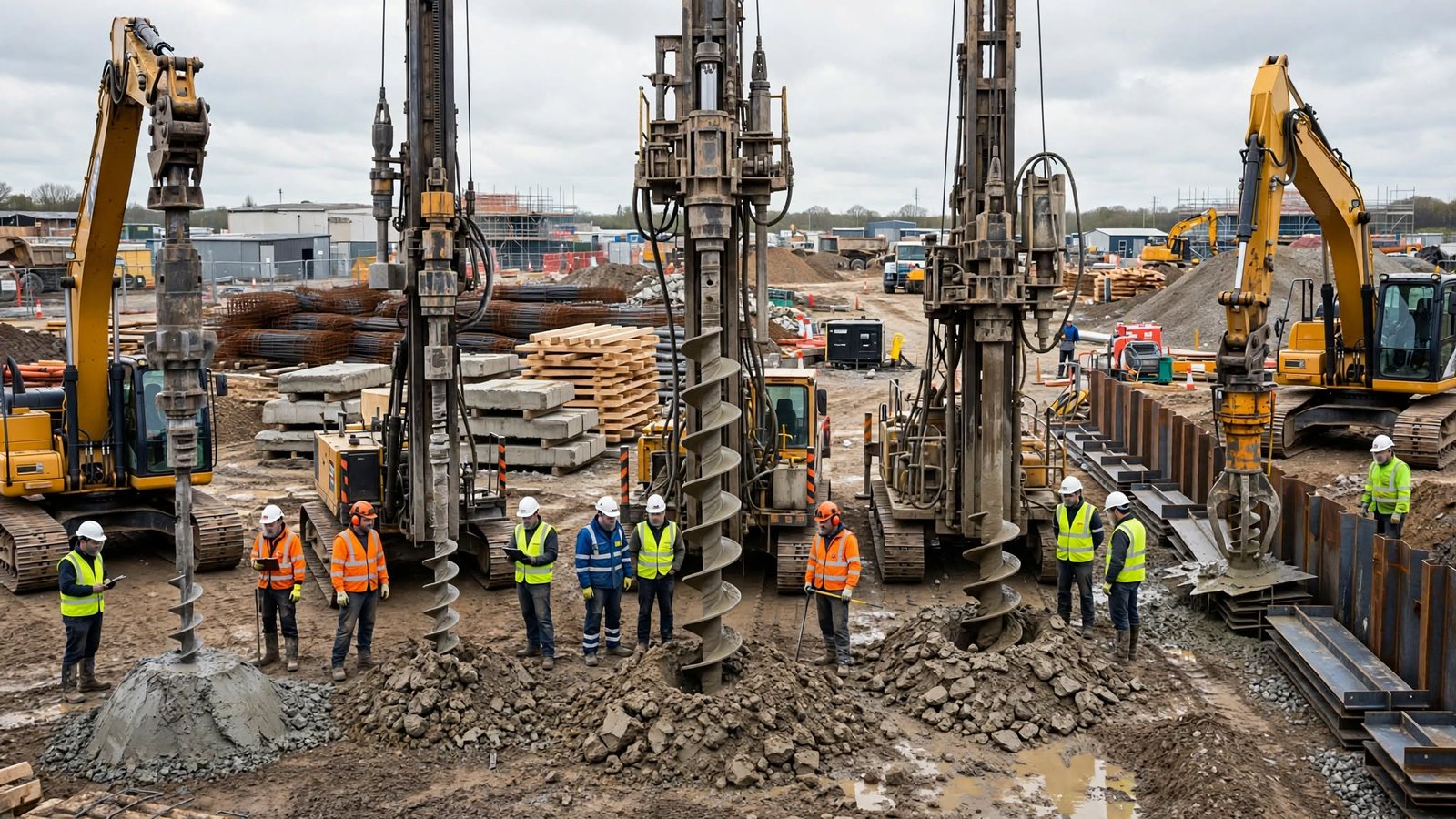
Pre-drilling is an auxiliary method used alongside other Pile Driving Methods. A hole is drilled before the pile is driven. The hole reduces soil resistance. The pile slides into position more easily.
Pre-drilling is used in specific conditions. Dense soils. Rocky ground. Areas with obstructions. The drilled hole penetrates the difficult layer. The pile then follows the hole to the required depth.
Pile Driving Methods combined with pre-drilling offer several benefits. Driving is faster. Vibration is reduced. Pile damage is minimized. The method extends the capabilities of standard driving equipment.
The diameter of the pre-drilled hole is critical. Too small and the pile still meets resistance. Too large and the pile loses support. Pile Driving Methods standards specify acceptable tolerances. Contractors must follow them.
Pre-drilling adds cost. The drilling equipment must be mobilized. The drilling process takes time. But the cost is often justified. The alternative is slower driving. Or damaged piles. Or failed foundations.
4. Jetting
Jetting is a specialized method among Pile Driving Methods. Water is injected at the pile tip. The water lubricates the soil. It reduces friction. The pile sinks under its own weight or with minimal driving.
Jetting is used in specific soil conditions. Clean sands respond well. The water pressure loosens the sand particles. The pile penetrates easily. The process is quick and efficient.
Pile Driving Methods using jetting have limitations. Jetting is not effective in clay soils. It is not effective in dense soils. It can cause ground settlement. It can damage nearby structures. Contractors must assess the risks carefully.
The environmental impact must also be considered. Jetting uses large volumes of water. The water must be managed. It cannot be discharged arbitrarily. These techniques regulations govern water disposal. Contractors must comply.
Jetting is rarely used alone. It is combined with impact or vibratory driving. The jetting starts the pile. The hammer finishes it. This combined approach is one of the most effective Pile Driving Methods for sandy sites.
5. Helical Piling
Helical piling is one of the most innovative Pile Driving Methods. Steel shafts with helical plates are screwed into the ground. The plates pull the pile down. The process is quiet. It produces no vibration.
Helical piles are installed with hydraulic motors. The motor rotates the pile. The helical plates bite into the soil. The pile advances. Installation is quick and precise. Efficiently moving these components around a busy jobsite is made easier with equipment like a wheel loader.
Pile Driving Methods using helical piles offer significant advantages. No vibration. No noise. No impact. The method is ideal for sensitive areas. Historic buildings. Hospitals. Residential neighborhoods.
The load capacity of helical piles is impressive. The helical plates provide bearing. The shaft provides friction. The combination supports heavy loads. These techniques standards recognize helical piling as a viable foundation solution.
Helical piling is not suitable for all conditions. Very dense soils resist installation. Rocky ground damages the plates. Contractors must assess soil conditions before selecting this method.
6. Driven Cast-In-Situ Piling
Driven cast-in-situ piling is a hybrid among Pile Driving Methods. A casing is driven into the ground. Concrete is poured into the casing. The casing is extracted. The concrete forms the pile.
The process combines driving and casting. The casing protects the hole. The concrete fills the void. The result is a strong, durable pile. The method is efficient and cost-effective.
Pile Driving Methods using cast-in-situ techniques offer advantages. The pile is formed in place. There are no joints. There are no splices. The pile is continuous. The integrity is excellent.
The method requires specialized equipment. A casing driver. A concrete pump. Extraction equipment. The investment is significant. But the results justify the cost. Contractors who master this method gain a competitive edge.
Quality control is critical. The concrete must be properly mixed. It must be properly placed. It must be properly cured. These techniques standards specify requirements. Contractors must follow them.
7. Micro Piling
Micro piling is one of the most versatile Pile Driving Methods. Small diameter piles are drilled and grouted into the ground. The piles carry heavy loads despite their size. The method is used in constrained spaces.
Micro piles are installed with specialized drilling rigs. The rigs fit into tight areas. Basements. Tunnels. Underpinning projects. The method reaches places other these techniques cannot.
The load capacity of micro piles is surprising. Steel reinforcement provides strength. Grout bonds the pile to the soil. The combination supports significant loads. These techniques standards recognize micro piling as a legitimate foundation technique.
The applications are diverse. Foundation repair. Slope stabilization. Excavation support. Micro piling solves problems that other methods cannot. Contractors who offer this service stand out.
Micro piling is not cheap. The drilling equipment is specialized. The installation is labor-intensive. But the results justify the cost. These techniques selection often favors micro piling for difficult sites.
8. Sheet Piling
Sheet piling is a specialized method among Pile Driving Methods. Interlocking steel sheets are driven into the ground. They form a continuous wall. The wall retains soil. It excludes water. It supports excavations.
Sheet piles are driven with vibratory hammers. The interlocking edges connect. The wall is formed. The excavation can proceed. The method is essential for waterfront projects.
These techniques using sheet piling offer advantages. The wall is watertight. The excavation is dry. The soil is retained. The method is efficient and reliable.
The sheets can be extracted. They can be reused. This makes sheet piling one of the most sustainable these techniques. The environmental benefits are significant.
Sheet piling requires careful planning. The sheets must be aligned. The interlock must engage. The wall must be straight. These techniques standards specify tolerances. Contractors must meet them.
9. Caisson Piling
Caisson piling is a method among these techniques used for deep foundations. A large diameter shaft is drilled or driven. The shaft is filled with concrete. The result is a massive foundation element.
Caissons are used for bridges. High-rise buildings. Marine structures. The loads are enormous. The caissons transfer the load to deep bearing strata.
These techniques using caissons offer advantages. The capacity is unmatched. The depth is adjustable. The method handles the most demanding projects.
The installation is complex. Specialized equipment is required. Skilled operators are essential. These techniques standards for caissons are strict. Contractors must comply.
Caisson piling is expensive. The equipment is large. The process is slow. But for certain projects, it is the only viable option. These techniques selection must consider all alternatives. Avoiding nearby structural damage is critical when deploying heavy equipment for caissons.
10. Resonance Driving
Resonance driving is one of the newest these techniques. The hammer operates at the natural frequency of the pile-soil system. The resonance reduces resistance. The pile advances rapidly.
The technology is advanced. Variable frequency hammers adjust to conditions. The system finds the resonance point. The pile drives smoothly. The method is efficient and precise.
These techniques using resonance offer advantages. Speed is excellent. Vibration is controlled. Noise is reduced. The method is suitable for urban areas.
The equipment is specialized. The cost is high. But the results justify the investment. Contractors who adopt this method gain advantages. They complete projects faster. They reduce complaints. They win more bids.
Resonance driving is still evolving. Research continues. New applications are discovered. These techniques standards are being developed. Early adopters gain expertise that others lack.
7 Factors in Method Selection
- 1. Soil conditions and stratification.
- 2. Pile type and material.
- 3. Required load capacity.
- 4. Environmental restrictions.
- 5. Site accessibility.
- 6. Project timeline.
- 7. Budget constraints.
Final Word
Pile Driving Methods determine project success. Impact driving. Vibratory driving. Pre-drilling. Jetting. Helical piling. Cast-in-situ. Micro piling. Sheet piling. Caisson piling. Resonance driving. Each method has strengths. Each has limitations.
Choosing the right Pile Driving Methods requires knowledge. Soil conditions must be understood. Pile requirements must be clear. Environmental factors must be assessed. The right method delivers results. The wrong method causes problems.
Modern Pile Driving Methods offer more options than ever before. Contractors who master these techniques gain advantages. They complete projects faster. They reduce costs. They improve quality.
The methods described here are proven. They are used on projects worldwide. They transform foundation work. Contractors who apply them succeed.
Study Pile Driving Methods. Select wisely. Execute precisely. Build strong foundations.