

Pile Driving Vibrations: 7 Damaging Effects on Nearby Structures

Table of Contents
- Introduction
- 1. Cracks in Walls and Foundations
- 2. Foundation Settlement
- 3. Damage to Buried Utilities
- 4. Damage to Historic and Sensitive Structures
- 5. Ground Settlement and Soil Densification
- 6. Damage to Adjacent Construction Work
- 7. Structural Fatigue and Long-Term Damage
- Monitoring and Measurement
- Mitigation Strategies
- Legal and Regulatory Considerations
- 7 Signs of Vibration Damage
- Final Word
Pile driving vibrations are one of the most serious concerns in urban construction projects. Every day, contractors drive piles near homes, businesses, and historic buildings. The vibrations travel through the ground. They reach nearby structures. They cause damage.
The problem is widespread. Construction sites are often in crowded areas. Buildings sit close to the work. The vibrations from pile driving affect all of them. Some damage is cosmetic. Some is structural. Some is catastrophic.
Pile driving vibrations are not always obvious. The ground may not feel like it is shaking. But the vibrations are still there. They travel through soil and rock. They transfer energy to building foundations. They cause cracks. They cause settlement. They cause collapse. Just as noise can have dangerous effects, ground vibrations introduce entirely different risks.
Understanding the effects of pile driving vibrations is essential for every contractor. The consequences are serious. Property damage claims are expensive. Lawsuits are common. Project delays are frequent. Prevention is always better than cure.
Here are 7 damaging effects of pile driving vibrations on nearby structures. Each effect has been documented in real construction projects. Each one is preventable with proper planning and monitoring.
1. Cracks in Walls and Foundations
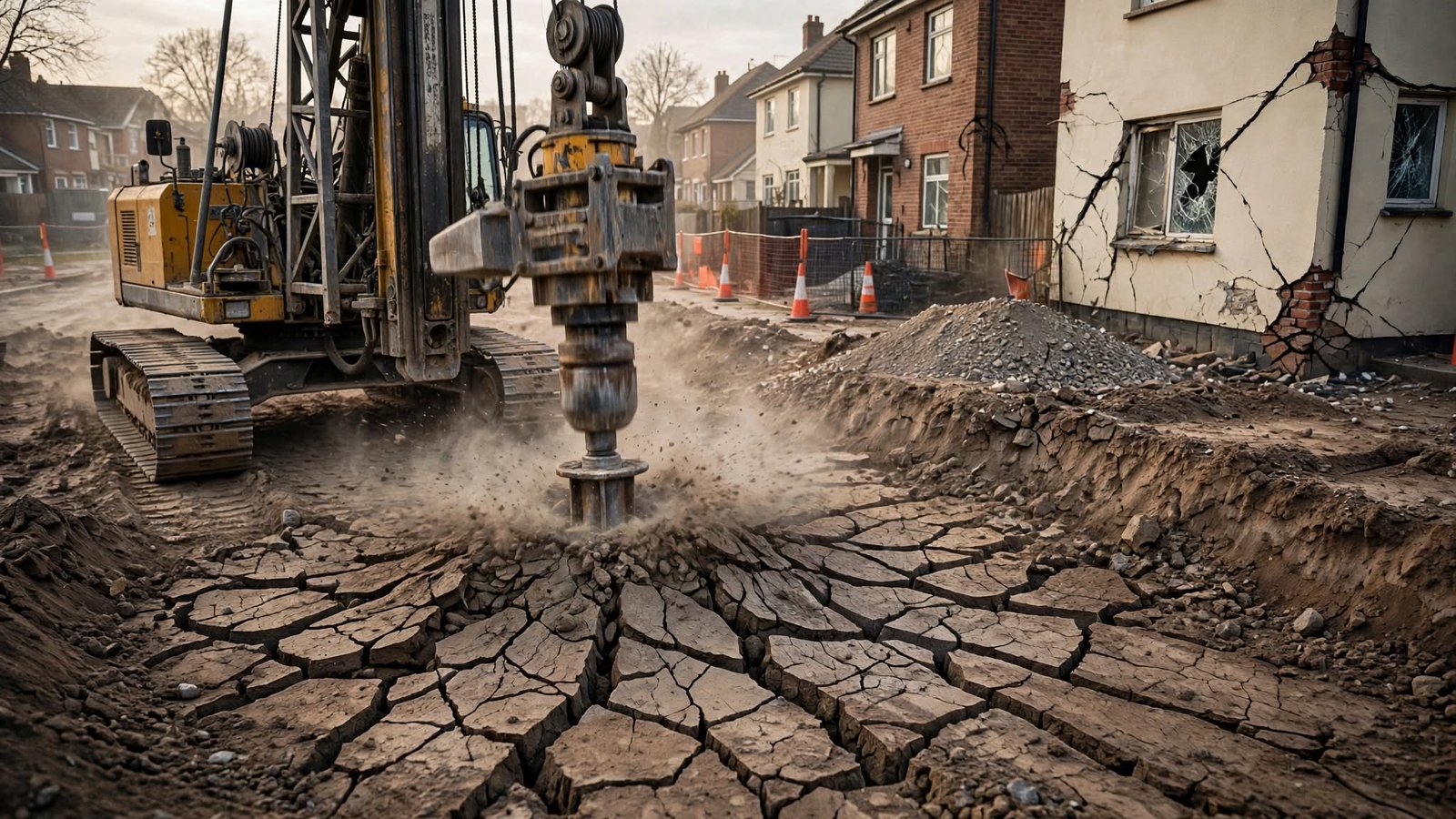
This is the most common damage from pile driving vibrations. Walls crack. Foundations crack. Floors crack. The cracks may be small at first. Hairline fractures in plaster. Thin lines in concrete. But they grow over time.
The cracks occur because pile driving vibrations stress building materials. Concrete and masonry are strong in compression but weak in tension. Vibrations create tension forces. The materials fail. Cracks form.
Pile driving vibrations cause two types of cracks. Settlement cracks occur when the ground compresses under the building. Structural cracks occur when the building frame twists or bends. Both types are serious.
Cosmetic cracks are common. Plaster cracks around windows. Drywall cracks at corners. These are unsightly but usually not dangerous. However, they indicate that pile driving vibrations are reaching the structure. More severe damage may follow.
Structural cracks are dangerous. Diagonal cracks in masonry walls. Horizontal cracks in foundation walls. Wide cracks in concrete floors. These indicate structural distress. The building may be unsafe.
Crack repair is expensive. Patching plaster costs thousands. Repairing structural cracks costs tens of thousands. Replacing damaged foundations costs hundreds of thousands. Pile driving vibrations cause all of these costs.
2. Foundation Settlement
Foundation settlement occurs when the ground beneath a building compresses. The building sinks. Walls crack. Floors slope. Doors stick. Windows jam.
Pile driving vibrations accelerate settlement. The vibrations shake the soil. Loose particles compact. Air and water escape from the voids. The ground volume reduces. The building drops. Utilizing advanced modern equipment, such as an electric forklift for site logistics, is one way contractors maintain tighter operational control, but vibrations from the actual driving process still require management.
Different soil types respond differently to pile driving vibrations. Sandy soils settle quickly during vibration. Clay soils settle slowly but can settle more overall. Loose fill soils are the most vulnerable. They compact significantly under vibration.
Settlement is rarely uniform. One part of the building sinks more than another. This creates differential settlement. The building tilts. Walls crack. Floors slope. Structural damage follows.
The consequences are severe. A building that settles even a few inches may become uninhabitable. The foundation must be underpinned. The building must be leveled. The cost is enormous. Pile driving vibrations cause this damage regularly.
3. Damage to Buried Utilities
Pile driving vibrations affect underground utilities. Water pipes crack. Gas lines break. Sewer pipes collapse. Electrical conduits fail. The damage is often invisible until the utility fails.
Water pipes are especially vulnerable. Cast iron and PVC pipes crack under pile driving vibrations. The cracks start small. They grow over time. Eventually, the pipe bursts. Water floods the area. Property damage follows.
Gas lines are also at risk. A cracked gas line leaks. The gas accumulates. An explosion becomes possible. The danger is immediate and severe. Pile driving vibrations near gas lines are extremely hazardous.
Sewer pipes collapse under vibration. The ground shifts. The pipes break. Sewage backs up. Contamination occurs. The cleanup is expensive. The health risks are serious.
Electrical conduits crack. Water enters. Short circuits occur. Power outages happen. Equipment is damaged. Pile driving vibrations cause all of these problems. Prevention is essential.
4. Damage to Historic and Sensitive Structures
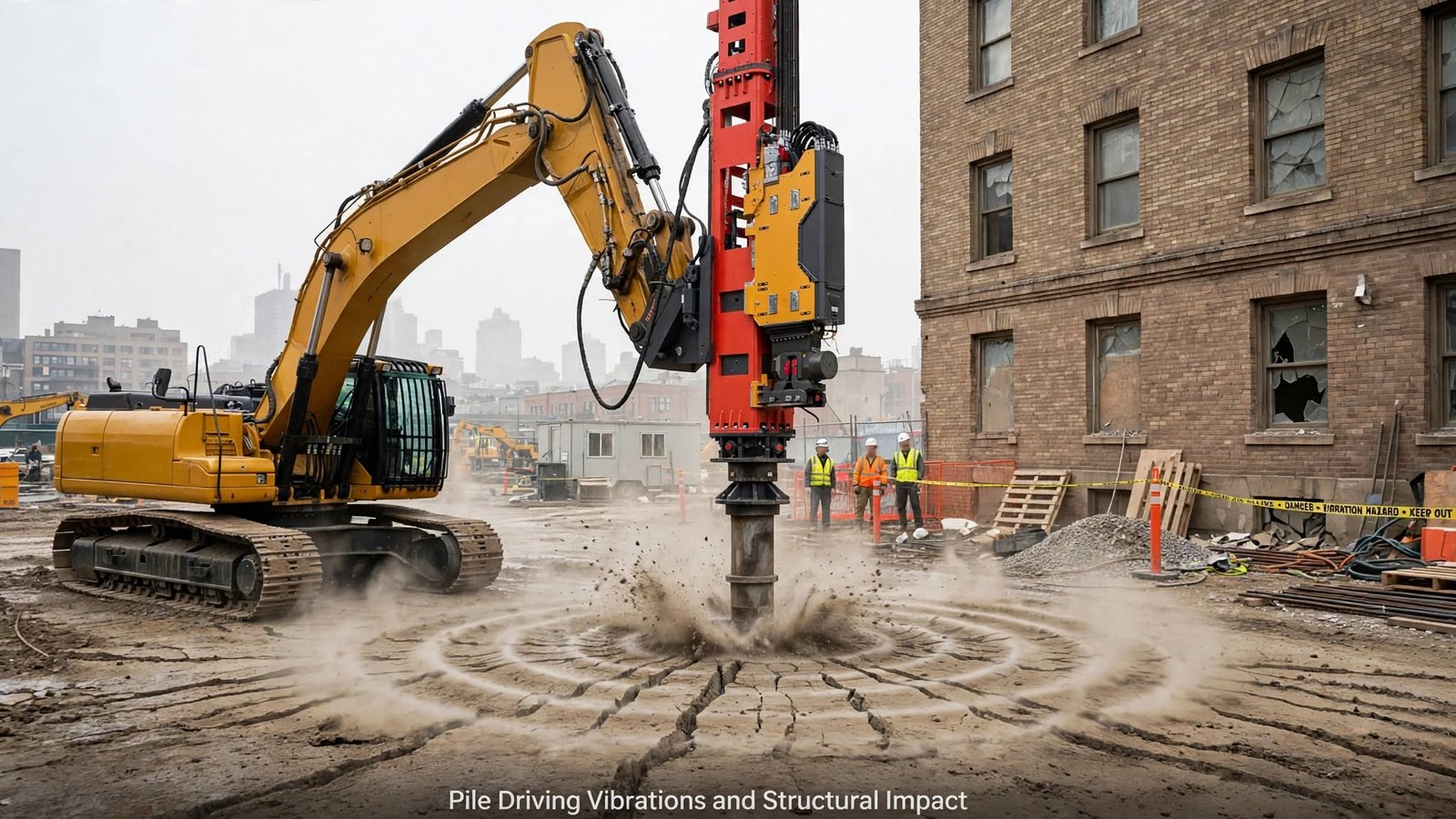
Historic buildings are especially vulnerable to pile driving vibrations. They are old. They are fragile. They were not designed for modern construction vibrations. They suffer damage easily.
Masonry is common in historic buildings. Brick and stone crack under vibration. Mortar crumbles. Facades separate. Ornamental details fall. The damage is often irreversible. Historic fabric is lost.
Churches and cathedrals are at risk. Stained glass windows crack. Spires tilt. Bell towers sway. Pile driving vibrations threaten these irreplaceable structures. The damage is cultural as well as physical.
Museums and archives also suffer. Vibrations cause artwork to fall. Sculptures topple. Display cases shatter. Archives are damaged. Pile driving vibrations destroy cultural heritage.
Protecting historic structures requires special precautions. Vibration limits are stricter. Monitoring is more intensive. Mitigation measures are mandatory. Contractors must respect the value of these structures.
5. Ground Settlement and Soil Densification
Pile driving vibrations affect the ground itself. Soil particles rearrange. Voids collapse. The ground surface drops. This ground settlement damages everything on the surface.
The settlement is often uneven. Some areas sink more than others. Buildings tilt. Pavements crack. Utilities break. Surface drainage changes. Water ponds where it should flow.
Soil densification is the cause of ground settlement. Loose soils compact under pile driving vibrations. The volume reduces. The ground level drops. The drop may be inches or even feet.
Different soils respond differently. Granular soils are most affected. The vibrations shake particles into tighter arrangements. The density increases. The settlement occurs quickly.
The consequences are widespread. Roads crack. Sidewalks heave. Building foundations are exposed. Pile driving vibrations cause all of these problems. Ground settlement is difficult and expensive to repair.
6. Damage to Adjacent Construction Work
Pile driving vibrations affect work in progress. Fresh concrete cracks. New masonry joints open. Excavation walls collapse. Formwork shifts. Adjacent construction is damaged.
Fresh concrete is especially vulnerable. Pile driving vibrations disrupt the curing process. Cracks form. Strength is reduced. The concrete must be removed and replaced. The delay is costly.
Masonry construction is also at risk. New walls crack before they are stable. Mortar joints open. The work must be redone. Schedule and cost are affected.
Excavation walls can collapse under pile driving vibrations. The shaking destabilizes the soil. Supports fail. Workers are at risk. Equipment is damaged. The project stops.
Formwork shifts during vibration. Concrete pours are misaligned. Structural elements are out of position. The corrections are expensive. Pile driving vibrations cause construction delays and cost overruns.
7. Structural Fatigue and Long-Term Damage
The most insidious effect of pile driving vibrations is structural fatigue. Each vibration cycle stresses the building. The stress accumulates. Over time, the structure weakens. Failure becomes possible.
Fatigue damage is hard to detect. There are no visible cracks at first. The building looks fine. But the internal stresses are building. Connections are loosening. Members are weakening.
Pile driving vibrations accelerate fatigue. The repetitive loading cycles add up quickly. A pile driving job can produce millions of vibration cycles. Each cycle contributes to fatigue.
The long-term consequences are serious. A building that appears safe today may fail tomorrow. A bridge that carries traffic safely may collapse after years of vibration exposure. Pile driving vibrations contribute to these failures.
Testing for fatigue damage is difficult. It requires specialized equipment. It takes time. It costs money. Many property owners do not test. They assume the building is fine. They are often wrong.
Monitoring and Measurement
Measuring pile driving vibrations is essential for prevention. Vibration monitors measure peak particle velocity. They measure frequency. They measure duration. The data guides decision-making.
Vibration limits are established by regulations. Different structures have different limits. Historic buildings have stricter limits. Sensitive equipment has stricter limits. Contractors must comply with all applicable limits.
Real-time monitoring alerts the operator when limits are approached. The operator adjusts the hammer. The vibrations are reduced. The structures are protected. Pile driving vibrations are controlled.
Monitoring records are essential for legal protection. If damage occurs, the records show compliance. The contractor is protected. The records also guide mitigation decisions. They show what works.
Mitigation Strategies
Several strategies reduce pile driving vibrations. Pre-drilling removes soil before pile driving. The pile encounters less resistance. Fewer hammer blows are needed. The vibrations are reduced.
Vibration isolation barriers work. Trenches filled with soft materials absorb vibrations. The energy is dissipated. Less reaches nearby structures. Pile driving vibrations are contained. Similar careful site strategies are essential, just as one would observe dangerous effects (Internal Link 2) from extreme noise.
Lower energy hammer settings reduce vibrations. More blows with less energy produce lower vibrations. The pile still reaches the required depth. The structures are protected.
Helical piles produce minimal vibrations. They are screwed into the ground. No impact is needed. Pile driving vibrations are virtually eliminated. The method is preferred near sensitive structures. Using efficient site machinery like a new lifter lift truck (External Link 2) can also assist in safely positioning these piles without adding excessive disruption.
Monitoring and adjustment is essential. The operator watches the vibration readings. The hammer is adjusted in real time. Pile driving vibrations are kept within limits. Structures are protected.
Legal and Regulatory Considerations
Regulations govern pile driving vibrations. Most jurisdictions have vibration limits. The limits protect structures. They protect people. They protect property.
Contractors must comply with all regulations. Permits require vibration monitoring. Inspections verify compliance. Violations result in fines. Projects are stopped. The consequences are costly.
Liability for vibration damage is clear. Contractors are responsible for damage caused by their work. Property owners sue for damages. The costs are substantial. Compliance is essential.
Documentation is critical. Vibration records must be maintained. Inspections must be documented. Correspondence must be saved. The records protect the contractor.
7 Signs of Vibration Damage
- 1. New cracks in walls and foundations.
- 2. Doors and windows sticking.
- 3. Sloping floors or settling foundations.
- 4. Cracks in pavement or sidewalks.
- 5. Leaking water or gas pipes.
- 6. Shifting of structural elements.
- 7. Unusual noises from the building structure.
Final Word
Pile driving vibrations are a serious concern. They damage structures. They disrupt communities. They cost money. But the damage is preventable.
Understanding the effects is essential. Cracks in walls. Foundation settlement. Damaged utilities. Historic structure damage. Ground settlement. Adjacent construction damage. Structural fatigue. All of these are caused by pile driving vibrations.
Monitoring and mitigation work. Vibration limits protect structures. Pre-drilling reduces vibrations. Isolation barriers contain vibrations. Lower energy settings minimize impact. Helical piles eliminate vibrations.
Contractors have a responsibility. They must protect neighboring structures. They must comply with regulations. They must monitor and adjust their work. They must prevent damage.
Pile driving vibrations are manageable. With proper planning and execution, the damage can be minimized. Structures can be protected. Projects can proceed safely.
Protect the community. Protect the structures. Control pile driving vibrations.