

Pile Driver Noise: 7 Dangerous Effects on Hearing You Can’t Ignore

Table of Contents
- Introduction
- 1. Permanent Hearing Loss
- 2. Tinnitus
- 3. Fatigue and Mental Exhaustion
- 4. Increased Risk of Workplace Accidents
- 5. Cardiovascular Strain
- 6. Sleep Disruption
- 7. Social Isolation and Mental Health Problems
- Legal and Regulatory Requirements
- 7 Noise Control Strategies
- Real Consequences of Ignoring Noise
- Final Word
The Hidden Threat: 7 Dangerous Effects of Pile Driver Noise
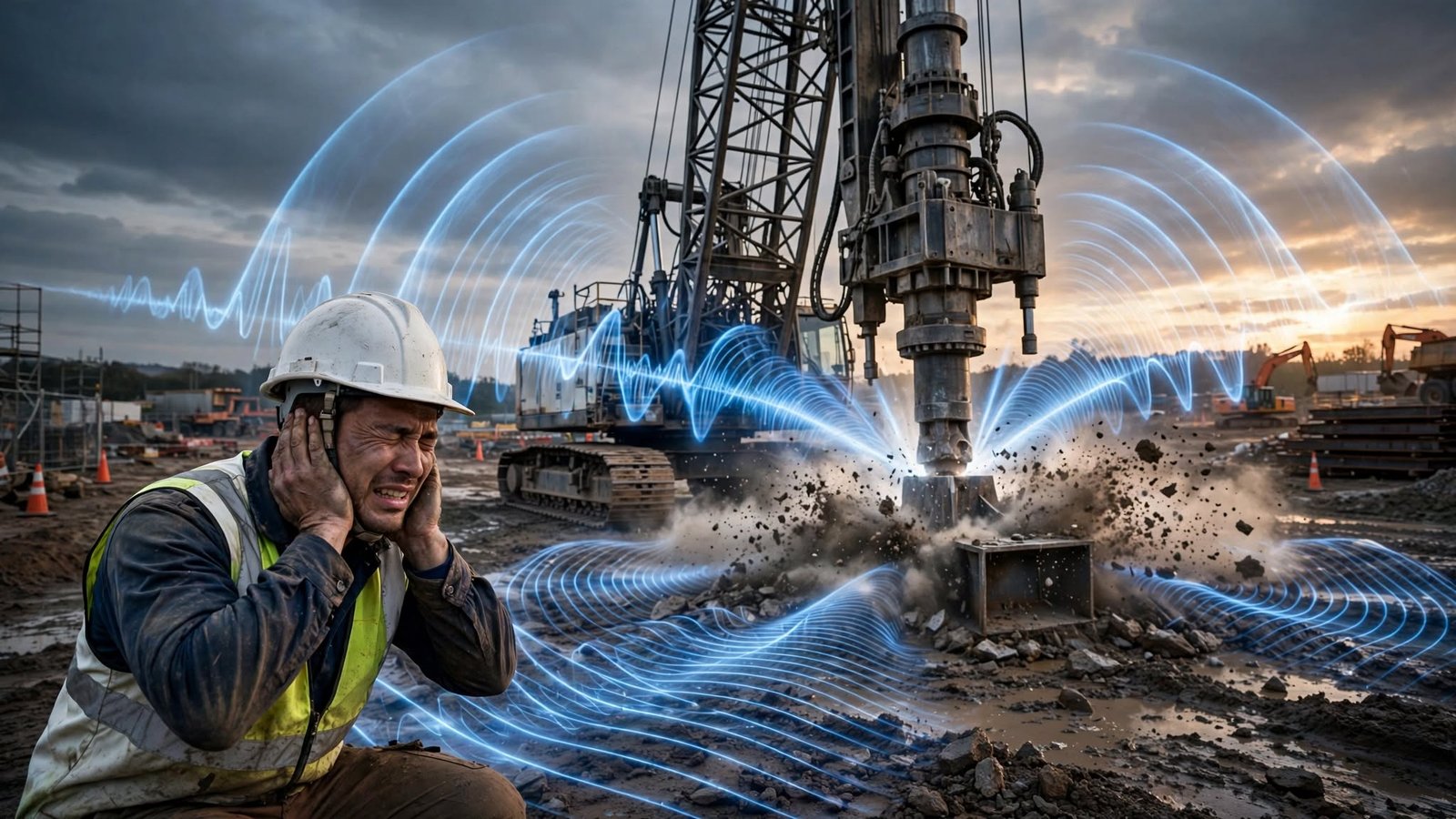
Pile driving is loud. Extremely loud. The constant pounding of steel against steel generates noise levels that rival jet engines. Workers exposed to this noise day after day face serious health consequences, whether operating large rigs or working near a diesel mini excavator on site.
The problem is that hearing damage happens slowly. A worker doesn’t notice the first signs. A little ringing in the ears after a shift. Slightly muffled hearing in the morning. These seem minor at first. But they accumulate. Over months and years, the damage becomes permanent.
Noise from pile driving is not just an annoyance. It is a serious occupational hazard. Millions of construction workers worldwide are exposed to dangerous noise levels every day. Many will lose their hearing permanently.
The effects of pile driver noise go beyond hearing loss. It causes stress. It disrupts sleep. It increases accident risk. It damages quality of life. These consequences are severe and long-lasting.
Understanding the effects of pile driver noise is the first step toward protection. This article examines 7 dangerous effects that every worker and employer should know. Each effect has been documented in research and real workplace cases, similar to the 7 shocking causes of severe accidents.
1. Permanent Hearing Loss
This is the most obvious and most serious effect of pile driver noise. Permanent hearing loss occurs when the delicate hair cells in the inner ear are destroyed. These cells do not regenerate. Once they are gone, hearing is gone forever.
A pile driver produces noise levels between 100 and 120 decibels. Exposure to 85 decibels for 8 hours causes hearing damage. At 120 decibels, damage occurs within minutes. A single shift can cause measurable hearing loss.
The damage is cumulative. Each day of exposure adds to the previous damage. A worker may not notice the loss at first. But after 5 years, the loss becomes noticeable. After 10 years, it is severe. After 20 years, the worker may be functionally deaf.
Pile driver noise damage affects all frequencies. High frequencies go first. The worker stops hearing birds chirping. Then speech frequencies go. Conversations become difficult. Phone calls become impossible. The worker withdraws from social situations.
Hearing aids provide some relief but do not restore normal hearing. They amplify all sounds, including background noise. They cannot replace the lost hair cells. The damage is permanent and irreversible.
2. Tinnitus
Tinnitus is a constant ringing, buzzing, or hissing in the ears. It is often the first sign of pile driver noise damage. The sound comes from the brain’s reaction to hearing loss. The brain creates phantom noise to compensate.
Tinnitus is maddening. The sound never stops. It is worse at night when the environment is quiet. Workers with tinnitus struggle to fall asleep. They wake up exhausted. Their quality of life plummets.
There is no cure for tinnitus. Treatments manage the symptoms but do not eliminate them. Masking devices create white noise to cover the ringing. Cognitive therapy helps workers cope. But the underlying condition remains.
Pile driver noise causes tinnitus in many workers. The constant high-impact noise damages the inner ear structures. The brain responds by creating phantom sounds. These sounds remain for life.
Workers with tinnitus struggle to concentrate. They have difficulty following conversations. They avoid quiet spaces because the ringing becomes unbearable. The condition affects every aspect of life.
3. Fatigue and Mental Exhaustion
Pile driver noise does not just damage the ears. It exhausts the entire body and mind. The brain works constantly to process and filter out the noise. This effort consumes mental energy.
After a shift in a noisy environment, workers feel drained. They have no energy for family activities. They avoid social interactions. They just want quiet. This fatigue extends beyond the workday.
Mental exhaustion from pile driver noise affects job performance. Tired workers make mistakes. They miss warning signs. They overlook safety procedures. Accident rates increase.
The fatigue also affects personal life. Workers who are mentally exhausted cannot engage with their families. They become irritable. They withdraw from relationships. The damage extends to everyone around them.
Managing fatigue requires protecting hearing. Workers who wear proper hearing protection report less mental exhaustion. Their brains do not have to work as hard to filter the noise.
4. Increased Risk of Workplace Accidents
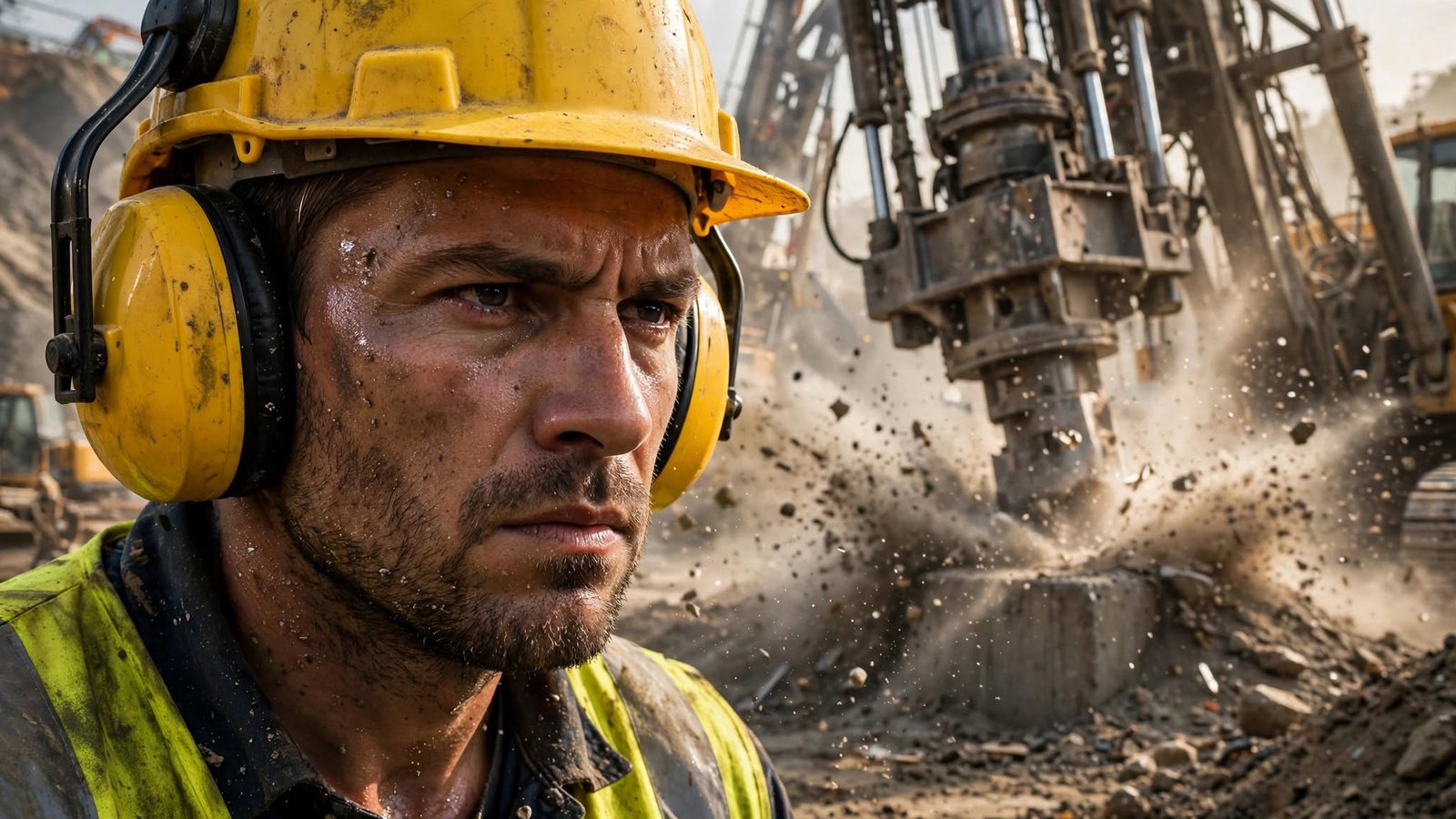
Pile driver noise masks important auditory signals. Warning alarms are covered by the noise. Backup beepers are not heard. Radio communication is impossible. Workers cannot hear each other.
The inability to hear warnings leads to accidents. A worker may not hear a machine moving behind them. They may not hear a shouted warning. They may not hear a structure failing. The noise covers all these sounds.
Workers may also struggle to localize sounds. They cannot tell where a sound is coming from. A warning signal from the left sounds like it comes from the right. They respond incorrectly. The delay causes injury.
Pile driver noise also affects communication. Ground crews cannot hear instructions from the operator. Operators cannot hear feedback from the ground. Miscommunication leads to mistakes. Piles go crooked. Machines get damaged. People get hurt. In fact, many of these issues are tied to the same root workplace cases (Internal Link 2) that lead to severe injuries.
Proper hearing protection that allows critical sounds to pass through helps. But many workers do not wear the right protection. They wear basic earplugs that block everything. They become isolated from essential safety signals.
5. Cardiovascular Strain
Recent research shows that pile driver noise affects the heart. Chronic noise exposure triggers stress responses. Blood pressure rises. Heart rate increases. Stress hormones flood the body.
These physiological responses protect the body in short-term situations. They help escape from immediate danger. But they are not meant to be constant. When they occur every day, they cause damage.
Heart disease rates are higher among workers exposed to chronic noise. The constant stress of pile driver noise contributes to high blood pressure. Heart attacks become more common. Strokes become more common.
Noise-induced stress also affects digestion. Workers exposed to chronic noise have more stomach problems. Ulcers are more common. Acid reflux is more common. The constant stress response disrupts normal bodily functions.
The cardiovascular effects of noise are often overlooked. Workers think about hearing loss but not heart disease. But the evidence is clear. Loud noise affects the whole body, not just the ears.
6. Sleep Disruption
Pile driver noise does not stop affecting workers when they leave the site. The damage continues at home. Tinnitus causes difficulty falling asleep. Noise sensitivity makes quiet environments unbearable.
After a shift, the ears are still ringing. The brain is still processing high noise levels. The worker cannot relax. Sleep is difficult and fragmented. They wake up exhausted. The next shift is even harder.
Sleep disruption from pile driver noise affects health in many ways. The immune system weakens. Recovery from injury is slower. Mental function declines. Concentration and memory suffer.
Workers may also experience nightmares related to noise. The constant pounding is traumatic. The unconscious mind processes this trauma during sleep. Sleep quality suffers further.
Protecting hearing during the day improves sleep at night. Workers who wear proper hearing protection report better sleep. Their ears recover more quickly. Their brains relax more easily.
7. Social Isolation and Mental Health Problems
Hearing loss from pile driver noise is not just a physical condition. It affects mental health too. Workers who cannot hear properly withdraw from social situations. They avoid conversations. They skip family gatherings.
The social isolation is profound. Talking becomes exhausting. Following conversations requires constant effort. Workers with hearing loss get tired of asking people to repeat themselves. They stop trying.
Mental health problems follow. Depression rates are higher among workers with hearing loss. Anxiety rates are higher. Workers feel trapped in a silent world. They cannot participate fully in family and community life.
Pile driver noise damage also affects emotional regulation. Tinnitus and hearing loss are frustrating. Workers become irritable. They snap at loved ones. Relationships suffer.
The mental health effects of hearing loss are often overlooked. Workers focus on the physical damage. They may not recognize the emotional consequences. But the impact is just as real and just as serious.
Legal and Regulatory Requirements
Many countries have regulations regarding pile driver noise. Employers are required to protect workers from excessive noise exposure. Hearing conservation programs are mandatory in many jurisdictions.
Noise monitoring is required. Employers must measure noise levels on site. If levels exceed regulated limits, controls must be implemented.
Hearing protection is required. Employers must provide suitable earplugs or earmuffs. Workers must wear them. Training on proper use is mandatory.
Audiometric testing is required in many places. Workers must have their hearing tested regularly. The testing detects early damage. Early intervention prevents further loss.
Employers who fail to comply face penalties. Fines are common. Lawsuits are common. Workers successfully sue employers for hearing damage. The costs are substantial.
7 Noise Control Strategies
- 1. Reducing noise at the source through equipment maintenance.
- 2. Installing noise barriers and enclosures around pile drivers.
- 3. Using quieter pile driving methods like vibratory hammers.
- 4. Implementing administrative controls like rotating workers.
- 5. Providing high-quality hearing protection equipment.
- 6. Training workers on proper hearing protection use.
- 7. Conducting regular noise monitoring and audiometric testing.
Real Consequences of Ignoring Pile Driver Noise
Consider a construction worker who spends 20 years operating a pile driver without hearing protection. The daily noise exposure causes gradual hearing loss. By age 45, the worker needs hearing aids. Communication with family becomes difficult. Social activities become impossible. The worker becomes isolated. Depression sets in.
The employer also suffers. Workers’ compensation claims increase. Productivity decreases. Turnover increases. Training new workers costs money (External Link 2). Lawsuits cost even more.
Now consider the same worker with proper hearing protection. Hearing is preserved. Quality of life remains high. The worker continues to be productive. The employer saves money on claims and lawsuits.
The choice is clear. Pile driver noise is serious. Protecting hearing is essential.
Final Word
Pile driver noise is not just a nuisance. It is a serious health hazard. The effects are severe and permanent. Hearing loss. Tinnitus. Fatigue. Accidents. Heart disease. Sleep disruption. Mental health problems.
These effects are preventable. Hearing protection works. Noise controls work. Training works. Every worker deserves protection. Every employer has a responsibility.
The science is clear. The regulations are clear. The solutions are available. There is no excuse for ignoring pile driver noise.