

Pile Driver Hydraulics: 10 Powerful Upgrades That Boost Performance

Table of Contents
- Introduction
- 1. Variable Displacement Pumps
- 2. Electronic Load-Sensing Controls
- 3. High-Efficiency Hydraulic Motors
- 4. Advanced Filtration Systems
- 5. Energy Recovery Systems
- 6. Proportional Control Valves
- 7. High-Flow Couplings and Connectors
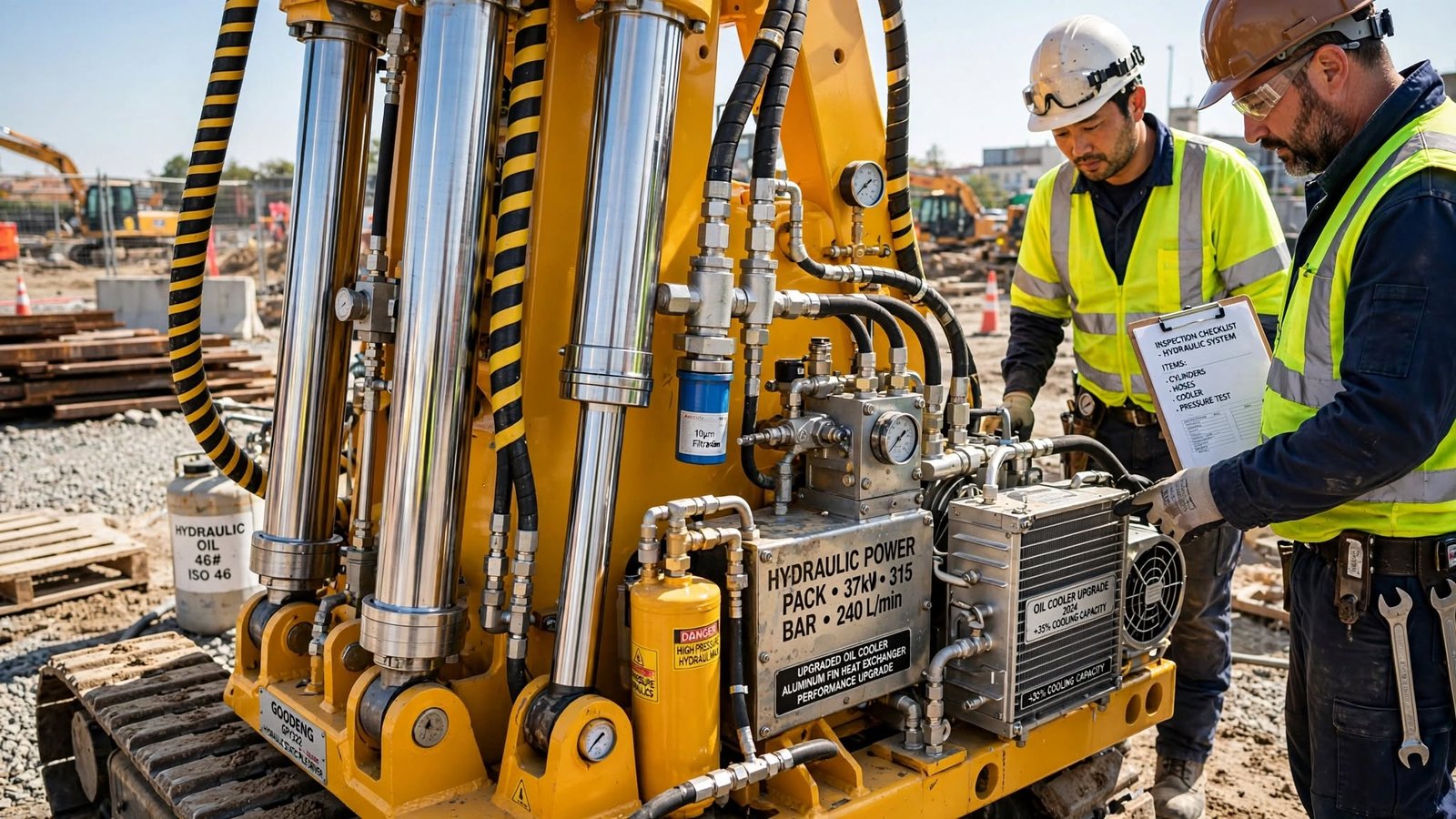
- 8. Enhanced Cooling Systems
- 9. Electronic Diagnostics and Monitoring
- 10. Hybrid Power Systems
- 7 Signs Your Hydraulics Need Upgrading
- The Financial Case for Upgrading
- Installation and Support Considerations
- Final Word
10 Powerful Upgrades to Boost Pile Driver Hydraulics Performance
Hydraulic systems are the backbone of every pile driver. They deliver the force that drives piles deep into the ground. They control the hammer. They position the leader. They move the machine. Without hydraulics, a pile driver is useless.
But not all hydraulic systems are equal. Older systems waste energy. They run hot. They break down frequently. They limit performance. Newer systems are more efficient. They deliver more power with less fuel. They last longer. They make operators more productive. Modern innovations, such as those integrated into the Typhon XFLEX 4068ET, show how far advanced pumps have come.
Upgrading pile driver hydraulics is one of the smartest investments a construction company can make. The return on investment is substantial. Fuel savings alone often pay for the upgrades within months. Reduced downtime adds even more value.
The technology in pile driver hydraulics has advanced rapidly. Variable displacement pumps. Electronic controls. Advanced filtration. Energy recovery systems. These innovations transform machine performance.
Here are 10 powerful upgrades that boost pile driver hydraulics performance. Each upgrade has been proven on real construction sites. Each one delivers measurable results.
1. Variable Displacement Pumps
Traditional hydraulic pumps deliver a fixed flow regardless of demand. The pump keeps pushing fluid even when the machine doesn’t need it. That wastes energy. The excess fluid gets heated. The system runs hot. Components wear faster.
Variable displacement pumps change the game. They deliver only the flow needed at any moment. When the operator needs maximum power, the pump delivers maximum flow. When the operator needs less, the pump reduces flow.
Pile driver hydraulics with variable displacement pumps run cooler. They use less fuel. They last longer. The savings are substantial. Many operators report 20 to 30 percent fuel savings after upgrading.
The responsiveness also improves. Variable displacement pumps react instantly to control inputs. The operator feels more in control. Precision improves. Productivity increases.
2. Electronic Load-Sensing Controls
Electronic controls take variable displacement pumps to the next level. Sensors monitor system pressure and flow in real time. The control unit adjusts pump output automatically based on demand.
Load-sensing controls in pile driver hydraulics ensure that the machine uses only the power it needs. No wasted energy. No unnecessary heat. The system operates at peak efficiency in all conditions.
The electronic controls also protect the system. They detect overload conditions instantly, preventing situations that might lead to costly pile driver accidents. They reduce flow before damage occurs. The system shuts down safely if necessary. Component life extends dramatically.
Operators appreciate the smoothness. Electronic controls eliminate jerky movements. The machine responds smoothly and predictably. Operator fatigue decreases. Productivity increases.
3. High-Efficiency Hydraulic Motors
Hydraulic motors convert fluid power into mechanical motion. Older motors are inefficient. They waste energy as heat. They leak internally. They lose power over time.
New high-efficiency motors in pile driver hydraulics deliver more power with less fluid. The internal clearances are tighter. The materials are better. The design is optimized for maximum efficiency.
The difference is noticeable. A machine with high-efficiency motors swings faster. It positions the leader more quickly. It drives piles with more force. The operator gets more work done in less time.
Efficiency also affects operating costs. High-efficiency motors use less fuel. They require fewer repairs. They last longer. The total cost of ownership drops significantly.
4. Advanced Filtration Systems
Hydraulic fluid must be clean. Contaminants cause wear. They damage pumps. They damage valves. They damage motors. Clean fluid extends component life dramatically.
Advanced filtration systems in pile driver hydraulics remove particles down to the micron level. They remove water contamination. They remove sludge. The fluid stays clean for longer periods.
High-efficiency filters have higher dirt-holding capacity. They last longer between changes. They cost more upfront but save money in the long run. Fewer filter changes mean less downtime.
Condition monitoring is also available. Sensors detect contamination levels. Alerts inform the operator when filters need changing. The system never runs with dirty fluid. Component life is maximized.
5. Energy Recovery Systems
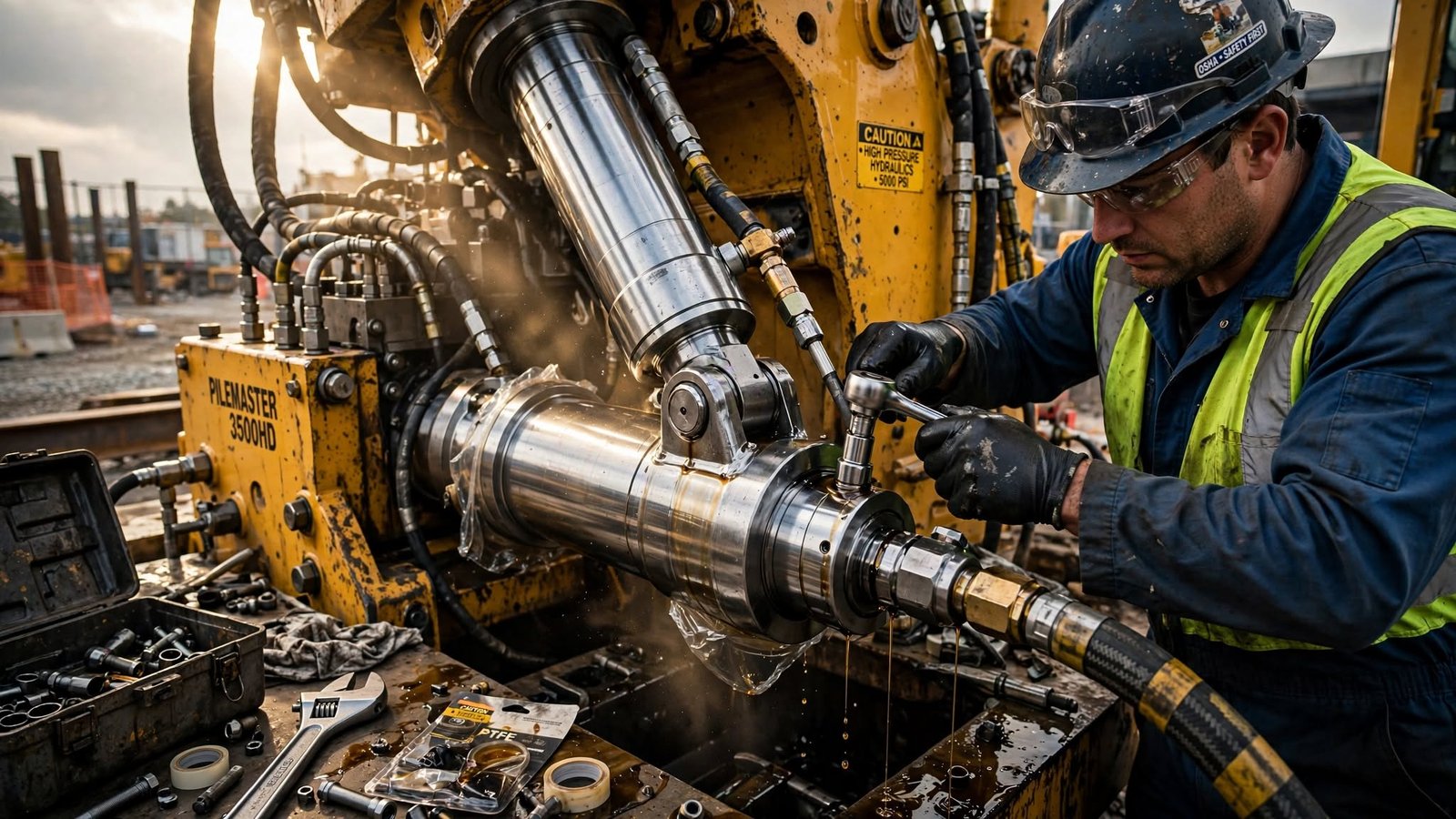
Traditional pile driver hydraulics waste energy. When the hammer strikes, some energy returns to the system. That energy is lost as heat. Energy recovery systems capture that energy and reuse it.
Energy recovery systems store excess energy in accumulators. The stored energy is released when needed. The hammer uses less hydraulic power per strike. The machine uses less fuel.
The savings are significant. Contractors report 15 to 25 percent fuel savings with energy recovery systems. The systems pay for themselves within months on high-usage machines.
Environmental benefits are also substantial. Less fuel consumption means lower emissions. The machines are more environmentally friendly. Compliance with emissions regulations becomes easier.
6. Proportional Control Valves
Older valves are on or off. The flow is either full or nothing. This creates jerky movements. It wastes energy. It reduces precision.
Proportional control valves in pile driver hydraulics provide smooth, variable flow. The operator controls the flow precisely. The machine moves smoothly and predictably.
The precision is especially valuable during pile alignment. The operator can inch the leader into position. The pile goes in straight. Rework is minimized.
Proportional valves also reduce shock loads on the system. The sudden starts and stops of on-off valves damage components. Proportional valves eliminate these shock loads. Component life increases.
7. High-Flow Couplings and Connectors
Restrictions in hydraulic lines reduce performance. Every connector adds resistance. Every fitting causes pressure drop. The system must work harder to overcome these restrictions.
High-flow couplings in pile driver hydraulics minimize pressure loss. The internal passages are larger. The flow path is smoother. Fluid moves freely through the system.
The result is more power at the hammer. The system delivers maximum force where it matters. Operators notice the difference immediately. The machine performs better on every job.
High-flow connectors also reduce heat generation. Restricted flow creates heat. Smooth flow stays cooler. The hydraulic system runs at optimal temperature.
8. Enhanced Cooling Systems
Hydraulic systems generate heat. Excessive heat damages components. It breaks down fluid. It reduces efficiency. Cooling systems must remove this heat effectively.
Enhanced cooling systems in pile driver hydraulics use larger coolers. They use more efficient fans. They use better flow routing. The hydraulic fluid stays within optimal temperature range.
The benefits are substantial. Components last longer. Fluid life extends. System efficiency remains high. The machine works reliably even in hot conditions.
Enhanced cooling also reduces maintenance. Overheated fluid breaks down and forms sludge. Cool fluid stays clean. Filters last longer. Drain intervals extend.
9. Electronic Diagnostics and Monitoring
Modern pile driver hydraulics include electronic diagnostics. Sensors monitor system health continuously. Pressure, temperature, flow, and contamination levels are all tracked.
The system alerts the operator to issues before they become critical. A slow pressure drop indicates wear. A temperature rise indicates a problem. The operator addresses the issue during scheduled maintenance.
Diagnostics also help with troubleshooting. When a problem occurs, the system identifies the cause. The repair is faster. Downtime is reduced. Maintenance costs decrease.
Data logs provide valuable information. Contractors analyze the data to optimize maintenance schedules. They identify patterns that indicate developing problems. They prevent failures before they happen.
10. Hybrid Power Systems
The latest innovation in pile driver hydraulics is hybrid power. Electric motors supplement the diesel engine. The battery stores energy during low-demand periods. The stored energy assists during high-demand periods. Systems featuring electric augmentation, much like the hydraulic lifting cylinder used on modern electric lifts, prove how versatile hybrid systems can be.
Hybrid systems deliver the best of both worlds. Diesel provides the power. Electric provides the efficiency. The machine runs cleaner and quieter.
Fuel savings are dramatic. Hybrid pile driver hydraulics use 30 to 40 percent less fuel. Emissions drop significantly. Noise levels decrease. The machine is more environmentally friendly.
The technology is proven. It has been tested and refined. Reliability is excellent. The cost premium is offset by fuel savings within a few years.
7 Signs Your Pile Driver Hydraulics Need Upgrading
- 1. The machine runs hotter than normal.
- 2. Fuel consumption has increased significantly.
- 3. The machine lacks power compared to newer units.
- 4. Hydraulic leaks are frequent and costly.
- 5. Component failures are becoming common.
- 6. The machine is less responsive than before.
- 7. Operating costs are rising steadily.
The Financial Case for Upgrading
Upgrading pile driver hydraulics requires investment. The upfront cost is substantial. But the return is equally substantial.
Fuel savings alone often cover the cost within 24 months. Reduced maintenance saves even more. Extended component life adds additional value. Reduced downtime increases productivity. Ignoring signs of failing hydraulics often leads to unexpected failures, much like the factors that cause catastrophic shocking causes on job sites.
The calculation is simple. A machine that uses 30 percent less fuel saves thousands each year. A machine that breaks down half as often saves thousands in repair costs. A machine that lasts 5 years longer is worth tens of thousands more.
The financial case is strong. Most contractors who upgrade pile driver hydraulics see returns exceeding 30 percent annually. The investment is clearly worthwhile.
Installation and Support Considerations
Upgrading pile driver hydraulics requires professional installation. The work should be done by trained technicians. Proper installation ensures optimal performance.
Ongoing support is essential. The contractor should have access to training. Operators need to understand the new systems. Maintenance staff need to know the new procedures.
Parts availability matters. The contractor should ensure replacement parts are readily available. Downtime waiting for parts is costly and frustrating.
Warranty protection provides peace of mind. Most reputable upgrade providers offer comprehensive warranties. The contractor is protected against defects and failures.
Final Word
Pile driver hydraulics have advanced dramatically. The 10 upgrades described here represent the state of the art. Variable displacement pumps. Electronic controls. High-efficiency motors. Advanced filtration. Energy recovery. Proportional valves. High-flow connectors. Enhanced cooling. Electronic diagnostics. Hybrid power.
Each upgrade delivers measurable benefits. Fuel savings. Reduced maintenance. Extended component life. Improved performance. Lower emissions. Better reliability.
The investment is substantial but justified. The return on investment is excellent. The benefits continue for the life of the machine.
Contractors who upgrade pile driver hydraulics gain a competitive advantage. Their machines work faster. They cost less to operate. They have less downtime. They deliver more profit.
The technology is available. The benefits are proven. The decision is clear. Upgrade pile driver hydraulics today. Boost performance. Increase profitability. Stay ahead of the competition.