


Piledriver: 7 Powerful Secrets to Maximize Your Project Results Now

Table of Contents
- Secret 1: Pick ONE Target and Go All In
- Secret 2: Bring the Right Ammunition
- Secret 3: Schedule Your Focus Time Like Your Life Depends On It
- Secret 4: Track Your Speed, Not Just Your Effort
- Secret 5: Get Feedback on Your Angle Constantly
- Secret 6: Take Care of the Machine (That’s You)
- Secret 7: Celebrate the Piledriver Wins (Yes, Really)
Let’s Get Real About What a Piledriver Actually Means
Look, I’ve seen hundreds of projects crash and burn. Not because people weren’t working hard — they were killing themselves with 14-hour days. The problem? They were hammering everywhere except where it actually mattered.
Then there’s the Piledriver. One machine. One spot. Repeated force. Until the job is done.
That’s what we’re talking about here. Not some fancy corporate buzzword. Not another “productivity hack” that sounds good on LinkedIn but falls apart by Tuesday afternoon. A real Piledriver approach means picking ONE thing that actually moves your project forward and hitting it with everything you’ve got.
Over the last decade, I’ve watched teams double their output just by adopting this Piledriver mindset. No new software. No hiring sprees. Just ruthless focus.
So here are 7 secrets I wish someone had told me earlier. They’re not pretty. They’re not theoretical. They work.
- Pick ONE goal and defend it ruthlessly
- Cut your tools and team down to only what powers real progress
- Protect 90+ minute focus blocks every single day
- Track velocity, not just hours logged
- Get honest feedback so your Piledriver never drifts off target
Secret 1: Pick ONE Target and Go All In
This sounds stupidly simple, right? But watch any team for a week and you’ll see the opposite.
Everyone wants to do everything. The sales guy wants to redesign the website. The developer wants to rewrite the entire codebase. The marketer wants to launch on five new platforms simultaneously. Meanwhile, your actual goal — the one thing that pays the bills — gets ignored.
Here’s the deal: this approach doesn’t care about side projects. It doesn’t care about “nice to haves.” It cares about ONE thing. For a construction crew, that’s driving steel into the ground. For you, it might be: closing 20 new deals this quarter, launching that product feature customers keep begging for, or cutting operational costs by 15%.
Whatever it is, write it down in plain English. Not some vague mission statement. Something like: “We will increase free trial conversions from 8% to 15% in 60 days.”
Now here’s the hard part — say “no” to everything that doesn’t serve that one objective. And I mean everything. That shiny new tool? No. That “strategic” meeting that could’ve been an email? No. That client who pays late and distracts your team? Hard no.
Every time you say yes to something irrelevant, you’re taking your focus off the target. And guess what? That pile doesn’t drive itself.
I’ve seen startups with zero budget crush established players simply because they had a clear, single-minded focus. Meanwhile, the big guys with all the resources were scattered across 50 initiatives, making zero progress on any of them.
So before you read further, grab a pen. Write your single Piledriver goal. Stick it on your monitor. That’s your north star. Everything else is noise.
Secret 2: Bring the Right Ammunition
Okay, you’ve picked your target. Now what?
You need tools. But not 47 different tools. That’s the trap. People think more software = more productivity. In reality, it’s the opposite. Every new tool adds friction. Every login, every onboarding, every “let me check that other dashboard” — it’s all stealing time from your real work.
Think about an actual piece of heavy machinery like the Typhon Naga 4.0 mini excavator. It’s built heavy, and it does exactly one thing really well. It doesn’t have 50 attachments. It has maybe two or three that are absolutely critical for different soil conditions.
Your toolkit should be the same. In my experience, the most effective teams use one project management tool, one communication channel, and one analytics source — so they’re never comparing apples to oranges. That’s it. Everything else is a distraction.
But here’s the kicker — you also need the right people. Your team can’t have five “idea people” and no one who executes. You need at least one operator who actually enjoys the grind. Someone who looks at a tough problem and thinks, “Good, this is what my Piledriver is built for.”
I worked with a logistics company once. They had amazing strategy documents. Beautiful presentations. But their momentum was broken because no one wanted to do the boring operational work. Once they hired two nuts-and-bolts operators, their delivery times improved 40% in a month.
So audit your toolkit — both tech and talent. If it doesn’t directly power your Piledriver, cut it. You’ll feel lighter within a week.
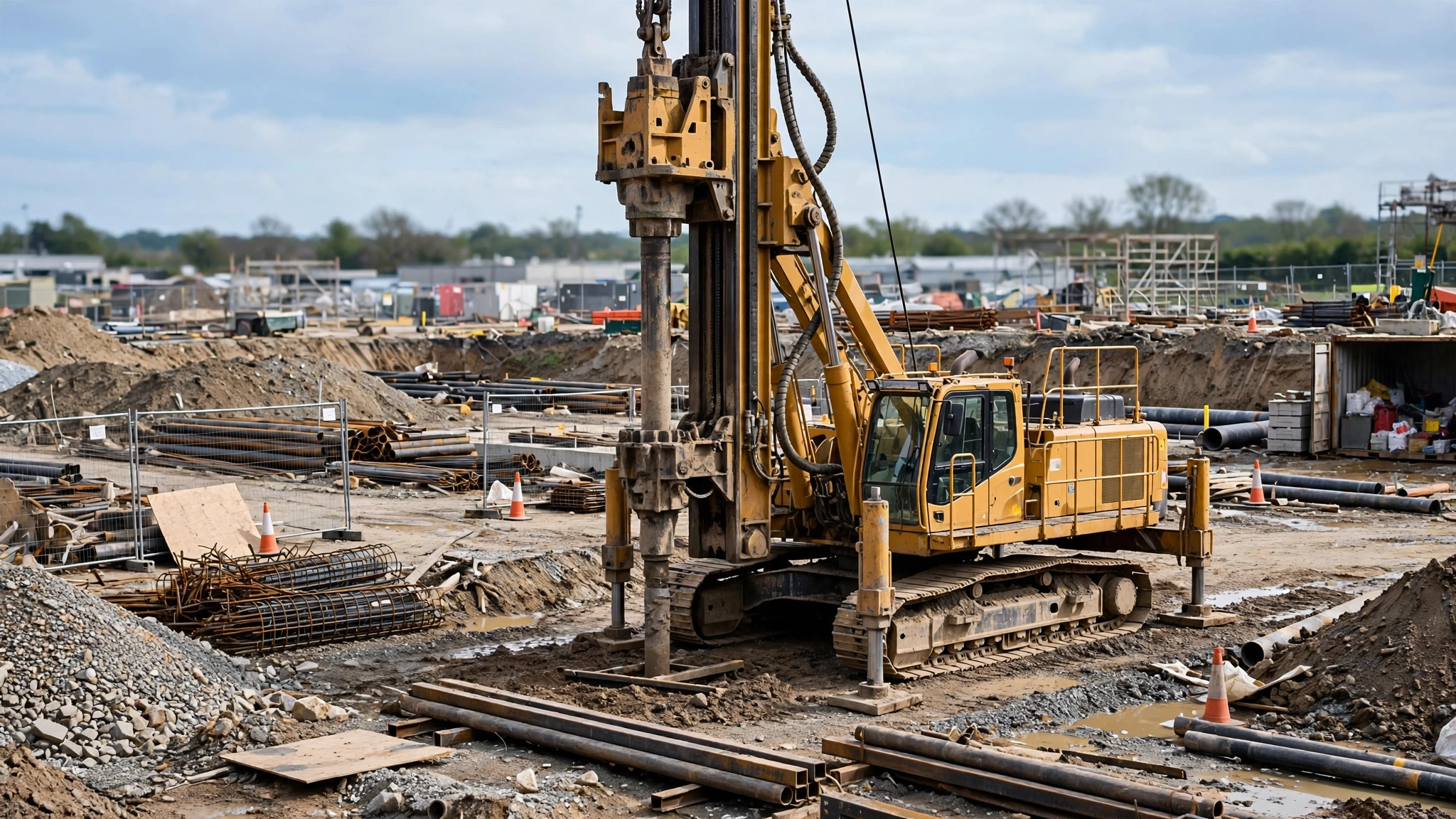
Secret 3: Schedule Your Focus Time Like Your Life Depends On It
Here’s something nobody tells you — this kind of focus doesn’t work in 15-minute bursts.
Think about it. By the time you’ve booted up your machine (or your brain), checked your messages, and remembered what you were doing, 10 minutes are gone. You get maybe 5 minutes of actual work. That’s pathetic.
You need BIG blocks. Minimum 90 minutes. Preferably two hours.
During these blocks, you disappear. No Slack. No email. No “quick calls.” Your phone goes on Do Not Disturb. If the building catches fire, someone can come get you. Otherwise, you’re driving that pile.
I block 9 AM to 11 AM every single day. That’s my window. Nothing moves it. Not client emergencies. Not “urgent” internal requests. Nothing.
Want to know what happens? I get more done in those two hours than most people do in their entire day. Because my focus is fully engaged. No warm-up, no cool-down — just pure, uninterrupted force.
Now, I know what you’re thinking: “But I have meetings! People need me!” Here’s a truth bomb — most meetings are useless. Seriously. Cancel half of them and see if anyone notices. They won’t. And if they do, they’ll respect you for protecting your focus time.
One more thing — don’t schedule your Piledriver block at 4 PM when you’re exhausted. Put it when your energy peaks. For 80% of people, that’s morning. For night owls, it might be late evening. Find YOUR window and guard it like a bulldog.
Secret 4: Track Your Speed, Not Just Your Effort
Effort is overrated. I know people who work 12-hour days and accomplish less than someone who works 4 focused hours. Why? Because their pace is slow. They’re pushing, but the pile isn’t moving.
You need to track velocity — how fast your Piledriver is actually penetrating. If you’re in sales, track demos booked per session, not total calls made. If you’re in development, track features shipped, not hours coded. If you’re in content, track pieces completed, not time spent “researching.”
Every Friday, I look at my numbers for the week. If they’re flat or down, I ask why. Was I distracted? Did my tools fail? Did I lose momentum?
Then I adjust. Maybe I need to shift my focus block earlier. Maybe I need better prep the night before. Maybe I need to delegate something that’s slowing me down.
Here’s the uncomfortable truth — if your velocity is low, more hours won’t fix it. You’re just digging a bigger hole faster. You need to fix the machine itself.
I once worked with a marketing team that was publishing 10 blog posts a month — but each post took 8 hours to write. That’s an 80-hour investment with mediocre returns. We cut their output to 4 posts a month but made each one 5x better. Their traffic doubled. Their impact per hour skyrocketed.
Stop counting effort. Start counting results per session. That number tells the real story.
Secret 5: Get Feedback on Your Angle Constantly
Ever seen a Piledriver go off-course? It’s ugly. The pile gets crooked. The whole foundation is compromised. Fixing it takes more time than doing it right the first time.
The same happens with your work. You think you’re making progress, but you’re actually drifting. You’re hitting the wrong spot because nobody told you to adjust.
That’s why feedback loops are non-negotiable. I do a 5-minute check at the end of every session. Just five minutes. I ask: “Did I actually move toward my goal? Or was I busy being busy?”
Once a week, I get brutal feedback from someone I trust. Not my mom. Not my cheerleader friend. Someone who will tell me: “Your angle is off. Here’s where you’re wasting force.”
Most people hate this. They want praise. They want validation. But praise doesn’t make you stronger. Cold, hard reality does.
I’ve had projects where I thought I was killing it — only to find out I was solving the wrong problem entirely. A quick feedback conversation saved me months of wasted effort.
So build feedback into your routine. Daily self-checks. Weekly external reviews. Monthly major recalibrations. Your Piledriver will stay straight, and you’ll finish faster than you ever thought possible.
Secret 6: Take Care of the Machine (That’s You)
This one sounds soft, but it’s the hardest secret to implement.
Your brain and body ARE the Piledriver. If they’re broken, your project stops. Period.
I’ve burned out twice. Both times, I thought I was being a hero — working nights, skipping meals, running on coffee. And both times, my momentum crashed hard. Not a gentle slowdown. A complete breakdown. Weeks of recovery. Zero progress.
Now I treat myself like a high-performance machine: 7 hours of sleep, non-negotiable — if I’m tired, my strikes are weak. Real food, not garbage — your brain can’t run on sugar and energy drinks. Movement every day — even a 20-minute walk resets my focus.
I also take one full day off each week. No email. No work thoughts. Just recovery. Sounds counterintuitive, but my output on Monday is double what it used to be.
Here’s the thing — a real Piledriver has maintenance schedules. Oil changes. Inspections. Cool-down periods. Why would you treat your own machine worse?
If you’re feeling drained, your body is telling you something. Listen to it. Take a break. Come back stronger. That’s not weakness — that’s smart operations. And if you want to see what disciplined, well-maintained equipment looks like on a real jobsite, take a look at the Typhon Fury 10 Mini Road Roller — built for exactly this kind of relentless, everyday grind.
Secret 7: Celebrate the Piledriver Wins (Yes, Really)
Last one. And it’s the one most people skip.
You hit a milestone. Real progress got made. What do you do? Move to the next thing immediately? That’s what most people do. And that’s why they burn out.
Your brain needs reward. Dopamine. A little “hell yeah” moment.
When my team finishes a big phase, we do something simple — order lunch, knock off early, share a win in our group chat. Nothing expensive. Nothing elaborate. Just acknowledgment.
I also keep a “Piledriver wins” list on my phone. Every time I complete a major block or hit a goal, I add one line. When I’m having a rough week, I scroll through it. Reminds me that the approach actually works.
This isn’t fluffy motivation. It’s neuroscience. Your brain associates effort with pleasure when you celebrate. That means your next session will feel easier. You’ll actually look forward to it.
Try it for one month. Celebrate every small win. I guarantee your consistency will improve. And if you’re looking to add a versatile, compact machine to your own lineup, check out the Typhon Fury 10 Mini Road Roller for more options built to keep things moving.
Final Thoughts — Be the Piledriver
That’s it. Seven secrets. None of them are complicated. None require a budget. They just require discipline.
Your Piledriver is waiting. Your target is clear. The only question is — are you ready to strike? For more on how the right equipment supports this kind of focused, high-output work, our friends over at Typhon Machinery build gear designed for exactly that kind of relentless focus.
Stop reading. Go set your first Piledriver block right now. Not tomorrow. Right now. Because while you’re overthinking, someone else is already driving their Piledriver straight through their goals.
Be that someone.