Piledriver Machine: 10 Game-Changing Features You Can’t Ignore This Year

Table of Contents
Piledriver Machine: 10 Game-Changing Features You Can’t Ignore This Year
What Makes a Piledriver Machine So Important Today
Look, if you’re in construction, foundation work, or any heavy civil project, you already know — the piledriver machine is your backbone. Without it, nothing stands. No skyscraper. No bridge. No port. Nothing.
But here’s the thing — the technology has changed. Fast. And if you’re still using old methods, you’re losing time, money, and safety.
I’ve been around these machines for years. I’ve seen operators struggle with outdated equipment while competitors fly past them using modern features. The gap is real.
So let’s cut the crap. Here are 10 game-changing features of the piledriver machine that you absolutely cannot ignore this year. Whether you’re buying new, upgrading, or just trying to stay informed, this list is for you.
- Smart hydraulics that adjust force to soil conditions automatically
- Real-time impact monitoring so you catch problems before they cost you
- Remote operation and GPS-guided positioning for safety and precision
- Energy recovery and automated lubrication that cut downtime and cost
- Integrated data logging that ends paperwork headaches for good
10 Game-Changing Features
1. Smart Hydraulic Control Systems
Gone are the days when a piledriver machine relied purely on brute force and operator instinct. Modern machines come with smart hydraulic systems that adjust pressure in real-time.
What does this mean for you? Your machine automatically senses soil conditions and changes impact force accordingly. Hard rock? It hits harder. Soft clay? It eases up. This prevents damage to both the pile and the machine itself.
I watched a crew finish a 200-pile job in 4 days instead of 10 — just because their machine had this feature. No guesswork. No rework. Just clean, consistent driving.
If your current piledriver machine doesn’t have smart hydraulics, you’re working blind.
2. Real-Time Impact Monitoring
Here’s something every operator wishes they had — live data on every single strike.
The new piledriver machine comes with impact monitors that show you:
- Blow count per minute
- Energy transferred to the pile
- Penetration depth per strike
- Any deviation from the desired angle
Why does this matter? Because you can catch problems before they become disasters. A good machine will alert you if the pile starts tilting or if resistance drops unexpectedly.
I’ve seen projects saved by this feature alone. Instead of driving 50 piles and discovering a problem, the machine warns you after the first bad strike. Fix it immediately. No wasted piles. No wasted time.
3. Eco-Friendly Engine Compliance
This is big. Governments are cracking down on emissions, and your piledriver machine needs to keep up.
Modern engines meet Tier 4 and Stage V emission standards. They burn cleaner, use less fuel, and produce fewer pollutants. Some even run on biodiesel blends.
But here’s the real kicker — cleaner engines also last longer. Less carbon buildup means fewer breakdowns. Your machine stays on the job instead of the repair bay.
I know one contractor who avoided a $50,000 fine just by upgrading his machine to a compliant model. The old one? Banned from working in city limits. Don’t let that be you.
4. Remote Operation Capability
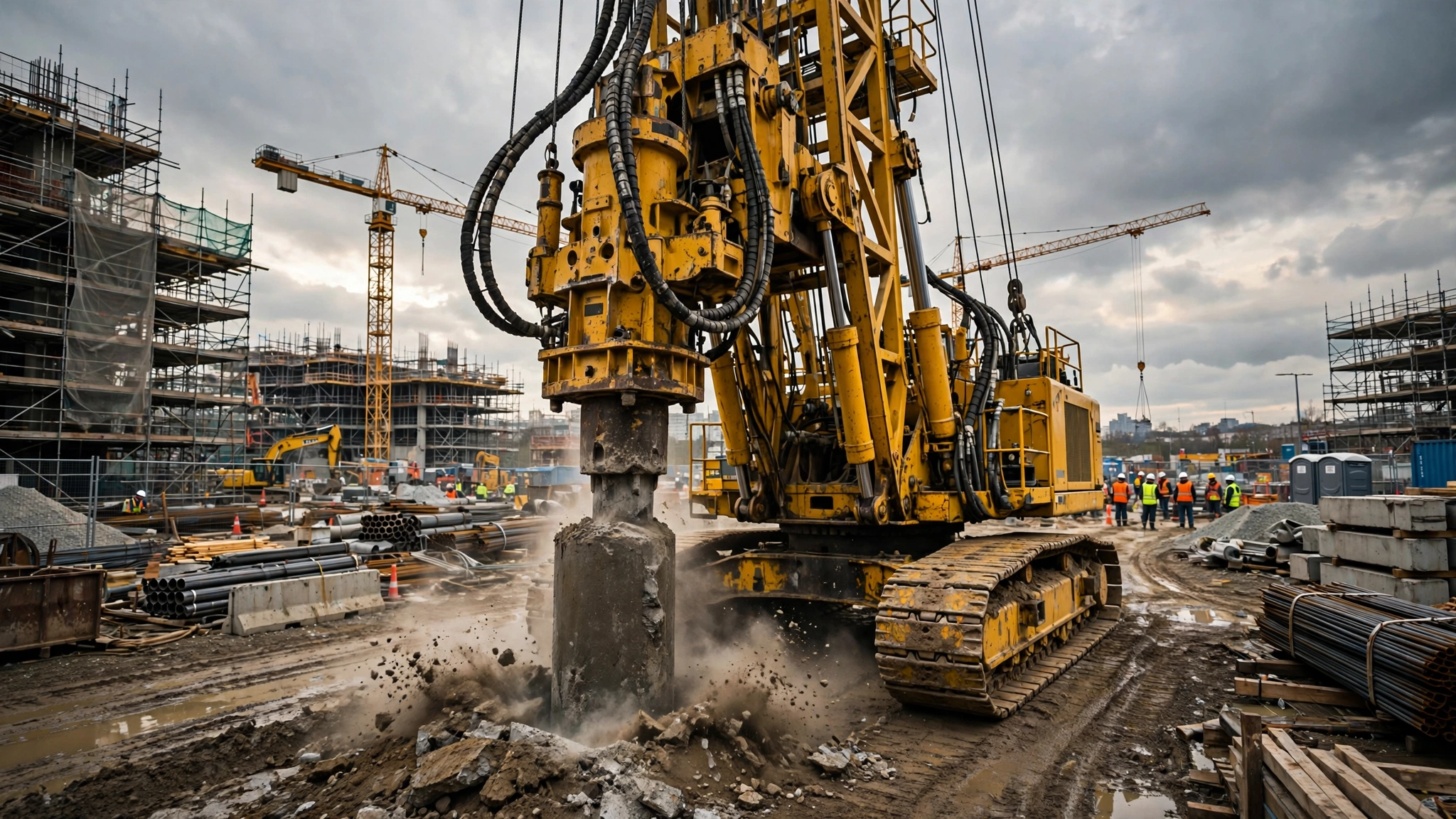
This one sounds like science fiction, but it’s real. Newer piledriver machine models can be operated from a safe distance using remote controls.
Why would you want that? Safety. Pile driving is dangerous. Flying debris, hydraulic bursts, machine shifts — operators get hurt. With remote operation, your machine works while you stand 50 meters away.
I’ve seen projects on unstable ground where the machine had to be positioned on a slope. Remote operation kept the operator safe while the machine did its job.
Plus, remote operation allows one person to monitor multiple piledriver machine units at once. Efficiency through the roof.
5. Self-Adjusting Vibration Dampeners
Vibration is the enemy. It damages surrounding structures, annoys neighbors, and shakes your machine apart over time.
New piledriver machine designs include self-adjusting dampeners that absorb shock based on ground conditions. Soft ground? Dampeners loosen up. Hard ground? They stiffen.
The result? Your machine runs smoother, lasts longer, and causes less disturbance to nearby buildings. I’ve worked on urban sites where this feature was the difference between project approval and a lawsuit.
If your current piledriver machine shakes like a washing machine on spin cycle, it’s time to upgrade.
6. GPS-Guided Positioning
Let’s talk precision. A piledriver machine used to be positioned by eye, tape measure, and prayer. Not anymore.
GPS integration tells your machine exactly where it needs to be — down to the centimeter. No guesswork. No measuring twice. The machine moves itself into position.
This is especially critical when you’re driving piles in tight patterns or on sloping sites. Your machine follows a digital blueprint. Every pile goes exactly where it should.
I watched a team drive 150 piles without a single one being off-spec. Their setup had GPS. The old method? They’d have redone at least 20 piles.
7. Energy Recovery Systems
Here’s something most people don’t know — a piledriver machine wastes a lot of energy. Every strike sends some force back up the machine instead of into the pile.
New models capture that upward energy and store it for the next strike. Think of it like a hybrid car. Less fuel burned. More power delivered.
One contractor told me his piledriver machine with energy recovery saved him 30% on diesel costs over a 6-month project. That’s real money. And the machine itself ran cooler, meaning less wear on components.
You’d be stupid to ignore this feature.
8. Modular Attachment Options
Not every job is the same. Sometimes you need to drive steel. Sometimes concrete. Sometimes timber.
The modern piledriver machine lets you switch attachments quickly. No crane needed. No hours of downtime. One operator can swap heads in under 30 minutes.
I’ve seen a machine go from driving steel H-piles to concrete precast piles in the same shift. Versatility like that keeps your project moving.
If your current machine is locked into one pile type, you’re leaving money on the table.
9. Automated Lubrication Systems
Maintenance kills productivity. Every hour your piledriver machine sits idle for greasing and oiling is an hour you’re not making progress.
Automated lube systems on new models handle this during operation. Small amounts of grease are applied continuously to high-wear areas. No shutdowns. No forgotten grease points.
I’ve had operators tell me their machine went from monthly breakdowns to quarterly ones just because of this feature. Fewer repairs. More uptime. Simple math.
10. Integrated Data Logging for Compliance
Finally — paperwork. Every project needs records. Blow counts. Penetration rates. Inspection logs.
New models log everything automatically. Every strike. Every adjustment. Every reading. Stored on an onboard computer or cloud.
When the inspector shows up, you just hand over the USB drive or tablet. No manual logs. No disputes about whether your machine met specifications.
I’ve seen entire projects delayed because paper logs were lost or illegible. Digital logging on your machine kills that headache forever.
Why You Need to Act Now
These 10 features aren’t luxury add-ons. They’re becoming standard on every serious piledriver machine sold today.
If your competitor buys new equipment with even half of these features, they’ll outwork you. Faster. Safer. Cheaper.
And you know what? The market is changing. Prices are dropping on newer models as manufacturers push for volume. Financing is easier than ever. Leasing options are available.
The only reason to delay is fear of change. And fear never built a foundation.
What to Look For When Buying Your Next Piledriver Machine
If you’re in the market, here’s my personal checklist:
- Does the piledriver machine have smart hydraulics? — Non-negotiable.
- Can it log data automatically? — Saves your ass on inspections.
- Is it emissions-compliant? — Avoid fines.
- Can you operate it remotely? — Safety first.
- Does it have GPS? — Precision matters.
Test drive before you buy. Bring your lead operator along. They’ll spot things you won’t.
Common Mistakes People Make With Piledriver Machines
Let me save you some pain. I’ve seen these mistakes hundreds of times.
- Mistake 1: Buying a used piledriver machine without a full inspection. Hidden wear costs more than a new machine.
- Mistake 2: Skimping on maintenance. A $500 oil change on your machine prevents a $20,000 engine rebuild.
- Mistake 3: Ignoring operator training. The best machine is useless if the operator doesn’t know how to use it.
- Mistake 4: Not comparing total cost of ownership. A cheaper machine might burn more fuel and break more often.
- Mistake 5: Forgetting about resale value. Newer models with these features hold their value much better.
The Future of Piledriver Machines
What’s next? AI-assisted operation. Self-diagnosing systems. Electric-powered models for indoor work.
It’s coming faster than you think. This machine of 2030 will barely resemble what we use today.
But you don’t need to wait. Even the current generation of models is light-years ahead of what existed 5 years ago.
Adopt now. Reap the benefits. Watch your project timelines shrink and your profits grow.
Final Word
The piledriver machine is the unsung hero of modern construction. Without it, cities don’t rise. Bridges don’t span. Ports don’t function.
But like any hero, it needs to evolve. And it has evolved in ways that directly impact your bottom line.
Don’t be the guy still using a 20-year-old machine while everyone else is finishing projects in half the time. Don’t be the one paying double in fuel and repair costs.
These 10 features aren’t optional anymore. They’re the new baseline.
So ask yourself — does your current piledriver machine have any of these? If the answer is no, you’ve got decisions to make.
Upgrade. Modernize. Profit. That’s the reality for 2026.